Free Template: How to Write Effective Construction Daily Logs
Learn how to write great daily logs for your construction projects and download our free construction daily work log template to get started today.

This content was originally published March 29, 2023, but was reviewed May 20, 2026, and is up to date.
Anyone who has ever worked on a construction project knows these types of environments can be extremely chaotic and highly stressful, so it pays to have a process in place that keeps track of the daily activity of a construction site accurately. This is where construction daily logs can come in handy, feeding back the daily progress of the project to everyone involved, from designers to contractors, ensuring everyone knows what is going on.
A construction daily log also ensures data is retained in case any information is needed for future reference.Therefore, construction daily logs, although being a very simple element of a construction project, can be incredibly useful, valuable, and important.
Here, we dive deeper into the ins and outs of construction daily logs, discuss how to create a thorough report, and demonstrate how they can contribute to the success of construction projects.
Click on a link below to jump straight to the section you’re most interested in:
Download Our Free Daily Construction Log Template
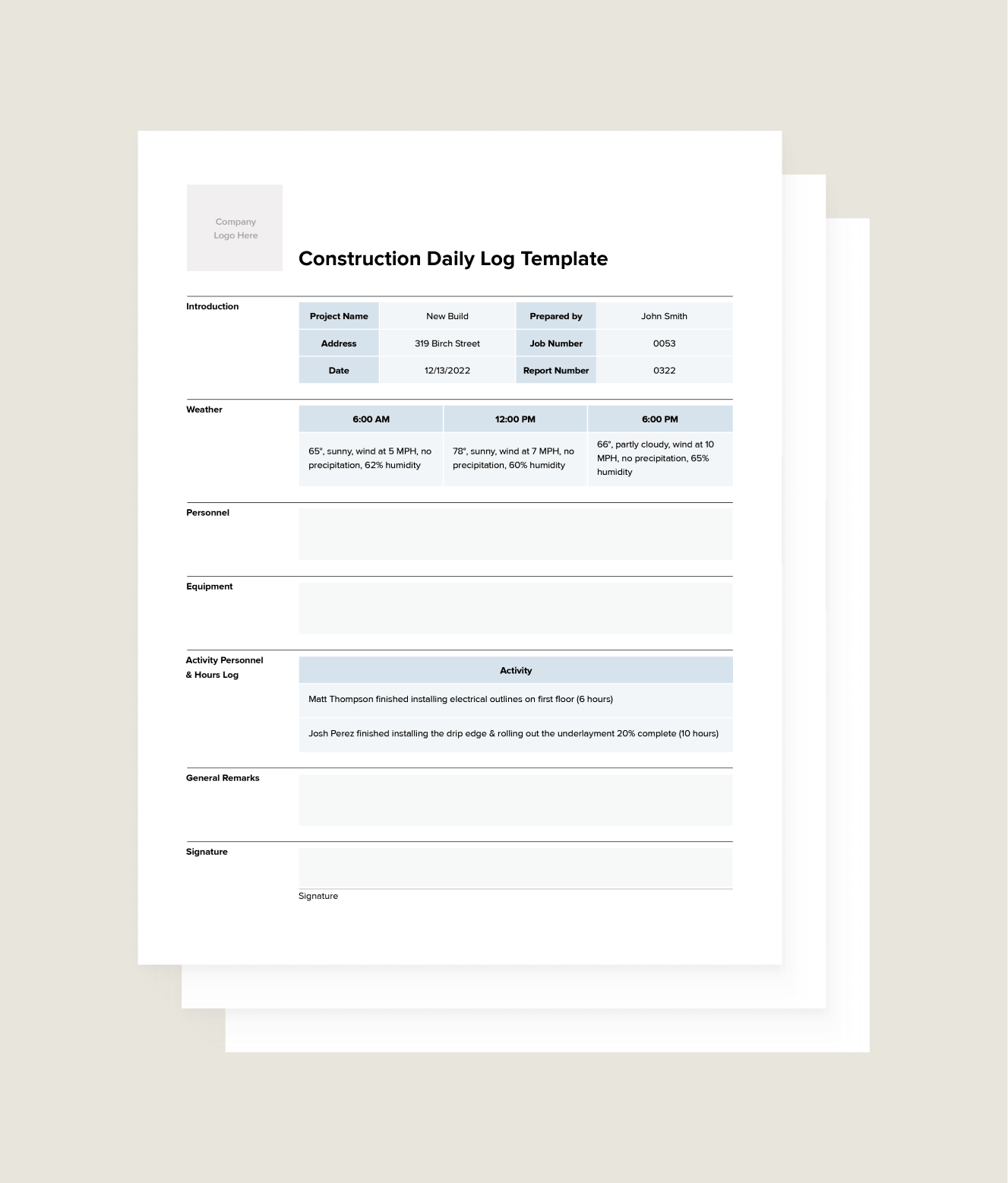
Get Started With This Free Construction Daily Log Template
Use this Construction Daily Log Template to build client trust and increase visibility.
Are you keen to detail and record everything that happens on your construction site, but not yet ready to embrace new software? Then download our free construction daily log template and start documenting the essential aspects of your project.
On the other hand, if you’re an established construction business and need to elevate your firm to the next level of productivity and efficiency, then read on for information on how innovative software programs will make documenting the daily activity of your projects a breeze.
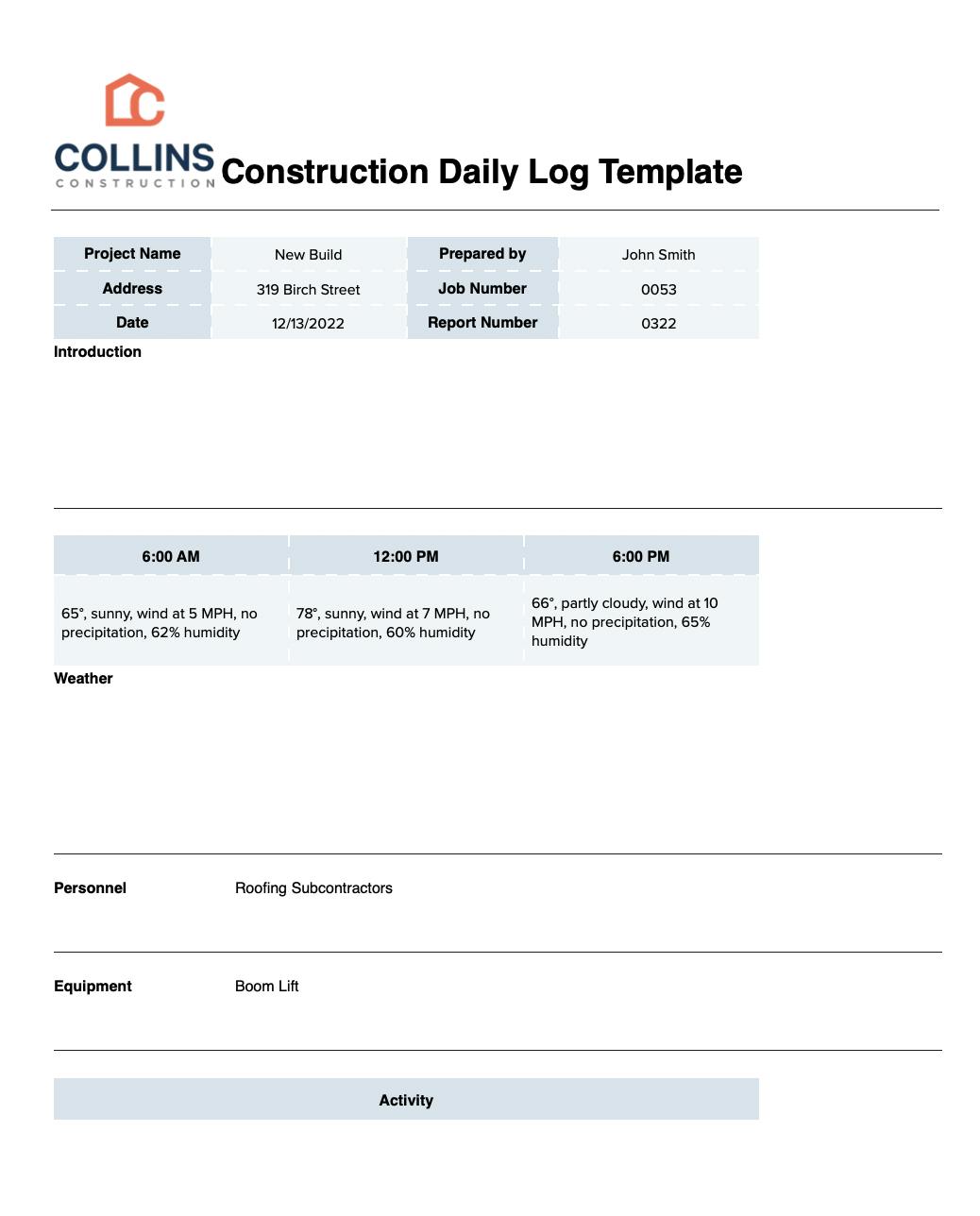
Construction Daily Log Example
What Is a Daily Log in Construction?
Put simply, a construction log is a daily report about the activity that takes place each day on a construction site. The type of information documented is up to the contractor in charge of the project; however, it could include details of the overall progress of the build, the weather conditions in order to track such progress, equipment and material tracking, deliveries, and workforce information, such as which subcontractors are on site each day. However, one of the most important pieces of information to log is the date of each report, so there is no confusion or misrepresentation.
Any information that is recorded each day is documented in the same standardized format to make the log clear and concise and to ensure the report can build a useful picture of the entire life of the project. What’s more, digital processes have now automated some of the aspects of construction daily logs, ensuring they are no longer a time-consuming task.

Why Are Construction Daily Logs Important?
The value and importance of construction daily logs shouldn’t be underestimated, and here’s why:
- A construction daily log offers increased transparency on the project and what has happened on a precise day, often revealing the truth and resolving disputes. Being able to refer back to construction logs from weeks or months gone by can be extremely valuable.
- Construction daily logs document any significant changes that happen throughout the project, such as changes to the design or subcontractors, ensuring everyone involved is clear and on board.
- Project managers are alerted to any potential delays or issues thanks to construction logs tracking the progress of a project. They can then identify any issues with the labor force and work out ways of improving the productivity of their team to ensure the project stays on schedule.

Who Uses Daily Logs?
At the end of the day, it is usually the responsibility of the project or construction manager to file the construction daily log to document the day’s progress, any safety incidents that may have occurred, and if there’s been any delays due to deliveries or weather conditions.
The log is then used by the project managers, subcontractors, and even the project owner, to track the build’s progress, understand which tasks will be needed the next day, and if there will be the necessary equipment and supplies to complete the following day's work.

Which Information Should Be Included in a Construction Daily Log?
We all know the saying, "If it’s worth doing something, it’s worth doing it well," and this certainly rings true when it comes to creating an optimal construction daily log that covers the critical information needed. Use the list below to discover the most commonly referenced information in a daily log, so you can produce epic files of efficiency:
- Log general details about the project - Whether you create a cover page or detail the information at the top of the construction daily log, it’s important to clearly document the name of the project, the location, and the start date.
- Always add the date of the log - This will be automated when using a software program; however, if you are manually filling out a construction daily work log template, make sure you always input the date for future reference.
- Create a staff list - Document the team members who were working on the site that day.
- Note the weather conditions - Weather conditions can greatly affect the progress of a project, particularly if certain aspects of the build, such as cement laying, rely on fine weather. Logging the daily forecast will notify the project owner of any delays that occur, even if the team was ready and on site.
- Track the progress of the work - Marking the status of jobs, such as to-do, in progress, and complete, will help you track the accomplishment of the construction team and ensure the project stays on track.
- Track the equipment on site - Similarly to tracking the progress of the work, the delivery of equipment and when it's used should be tracked to ensure everything that is needed for the build is on site at the right time and in a good working order. This is also important for security issues.
- Log the materials on site - Keeping an inventory of the quantity of materials on site each day such as wood, paint, and glass, is essential for the progression of the project. It’s also important to list any deliveries, especially if materials have failed to turn up.
- Document meetings and discussions - Notes from meetings that have occurred on site will serve as a reminder of what was discussed, any changes that were agreed, or any work that needs to be addressed.
- Note accidents and incidents - When accidents or incidents occur, it is essential to log the circumstances and how it was dealt with in case there are any repercussions against your construction firm in the future.
- Make a note of any visitors to the site - Site managers must report any visitors to the site each day in order to comply with safety requirements.

How to Make a Daily Report for a Construction Project
Now you know which information you need to include in a construction daily report example, here we look at how you should be documenting it:
- Always start with the project details - Every construction site daily log should have the name of the job, the job type, which phase you are in, and the date of the daily log.
- Define the weather - When you experience bad weather, explain the conditions, how precisely it slowed down the work, and how much time was lost due to the weather.
- Outline completed tasks - List all the activities that were achieved throughout the day, what is still ongoing, and what still needs to be done.
- List the team and their hours - As well as listing the name of each team member who worked on the site that day, make a note of their role and the hours they worked.
- Log usage of equipment - Note when equipment was used, idle, or out of order while also noting the amount of time it was in use. This will contribute to the maintenance of the equipment.
- List materials - Document the name of the materials that are used each day, the amount used, and an estimate of what is left on site.
- Identify any delays - List the type of delay that occurred, such as a delivery or slowdown due to weather, and then estimate the amount of time that was lost.
- Log any safety updates - When safety inspections of the site or equipment occur, log the date and time it happened, what was inspected, and if there was any feedback.
- Take details of site visits - Any visitors to the site must be documented by name, title, time of their visit, and the reason for their visit. If the visitor is a city official checking that everything is done to code, document the outcome of the visit.

Tips for Writing Better Daily Reports
Save time by nailing better construction daily logs from that start with these savvy tips:
- Strike the right balance of detail - It’s important to log enough detail about the daily activities that have occurred, yet not too much detail that you’ll be up all night filling it in. Identify the sufficient amount of information you can log in a time-efficient way.
- Document daily logs right away - No doubt you’ll be keen to get away at the end of the day; however, leaving the task of writing a daily log until the next morning could result in details being lost or forgotten. Get in the habit of compiling a construction site daily log at different stages throughout the day, and then completing it with any updates at tools down.
- Stay clear and concise - Keep your log easy to understand at a quick glance. A wide variety of project team members will be using the log as reference, so the information needs to be easy to navigate and understand.
- Always be transparent - Use the log as a way of clearly communicating the progress of the project and any possible delays or issues that may arise, so that all team members are aware.
- Use daily logs to remain contract compliant - A daily log is a useful tool for ensuring everyone meets the standard of the construction contract, while also serving as evidence that the project and workers on site have adhered to the terms of the contract.

Why You Should Use a Daily Log Software
The benefits of using daily log software hugely outweigh that of using static daily construction log templates, and here’s why:
- Time-efficiency and accuracy - By using construction log software instead of a construction daily work log template, you can complete your daily logs both efficiently and accurately while also accessing past logs faster and easier when needed. Every log is stored safely and securely, giving you reassurance that all your hard work won’t be lost.
- Look more professional - Forget piles of paperwork making your look disorganized and chaotic. Present yourself as a professional construction company with efficient digital processes that accurately record the project and can be shared with everyone involved.
- Be able to send daily logs instantly - Gone are the days of having to return to the office to log the project activities. With innovative software, you can compile accurate daily logs from the jobsite, ensuring everything necessary is remembered and included.
- Send and receive information efficiently - Share the construction site daily log with other subcontractors and the project owner at the touch of a button, ensuring everyone is on the same page for the next day of the build. Information can also be received quickly, so ideas and thoughts can be shared between the team.
Conclusion
Arm yourself with all these nifty hints and tips, and we guarantee you’ll be compiling the most precise and efficient construction daily logs in the industry. To keep learning, explore our next guide on How to Track Construction Time.
Sign up or a free trial of Houzz Pro to explore our construction management software.


Want advice delivered to your inbox?
Unlock industry insights and updates for contractors and design pros
By signing up, I agree to the Houzz Terms of Use and Privacy Policy and that Houzz may use my information to contact me about relevant content, products, and services.