Design the Future With AI: How Interior Designers Can Modernize Their Workflow
Where generic chat tools fall short, and industry-trained AI will allow designers to effectively eliminate busywork, protect firm profitability and elevate the client experience.

Running a successful interior design firm is one of the most detail-intensive businesses in the world. Designers balance high-level creative vision with a constant stream of administrative logistics: tracking client selections, drafting proposals, organizing mood boards, managing procurement, and keeping budgets intact.
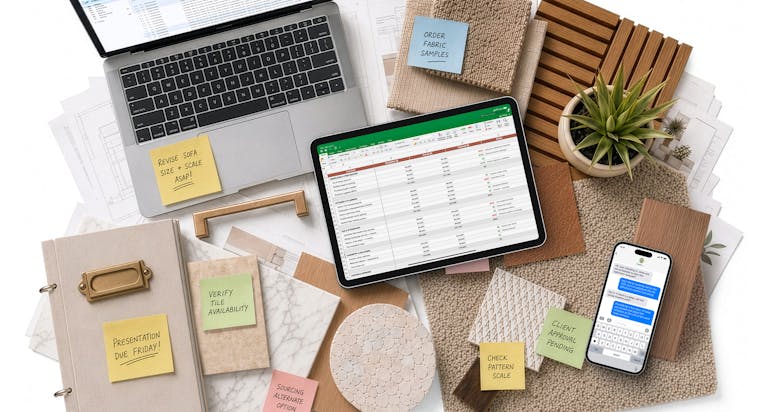
While many designers have experimented with generic AI tools like ChatGPT or Claude, these standalone systems often add an extra "copy-paste tax." Because generic tools don't connect to your firm's project data, you end up spending time manually transferring information across disconnected systems.
True workflow transformation happens when AI is embedded directly into your core design software. Here is how interior designers will effectively use industry-trained AI to eliminate busywork, protect firm profitability, and elevate the client experience from first contact to final reveal.

Streamlining Inquiry and Client Qualification
Winning new clients requires speed and professionalism, but dropping tools to reply to every incoming inquiry takes focus away from active design work. An AI-driven sales workflow acts as an always-on studio assistant that captures and qualifies leads automatically.
- Instant, channel-specific responses: The system detects incoming inquiries across email, phone or web channels and drafts personalized replies in your firm's unique voice.
- Automated lead scoring: Inbound leads are scored against your ideal budget range, project type, and geographic service area within seconds.
- Pre-consultation briefs: Before your initial client meeting, AI compiles a full preparation brief detailing the client's scope, stated budget, priorities and suggested discussion prompts.
Key benefit: You arrive at every initial consultation thoroughly prepared, holding a clear client summary and preliminary scope expectations before competitors even send an email.
Elevating Design Development and Visualizations
Client hesitation during design development often stems from an inability to picture the end result. AI-powered visualization tools bridge the gap between creative concept and client confidence.
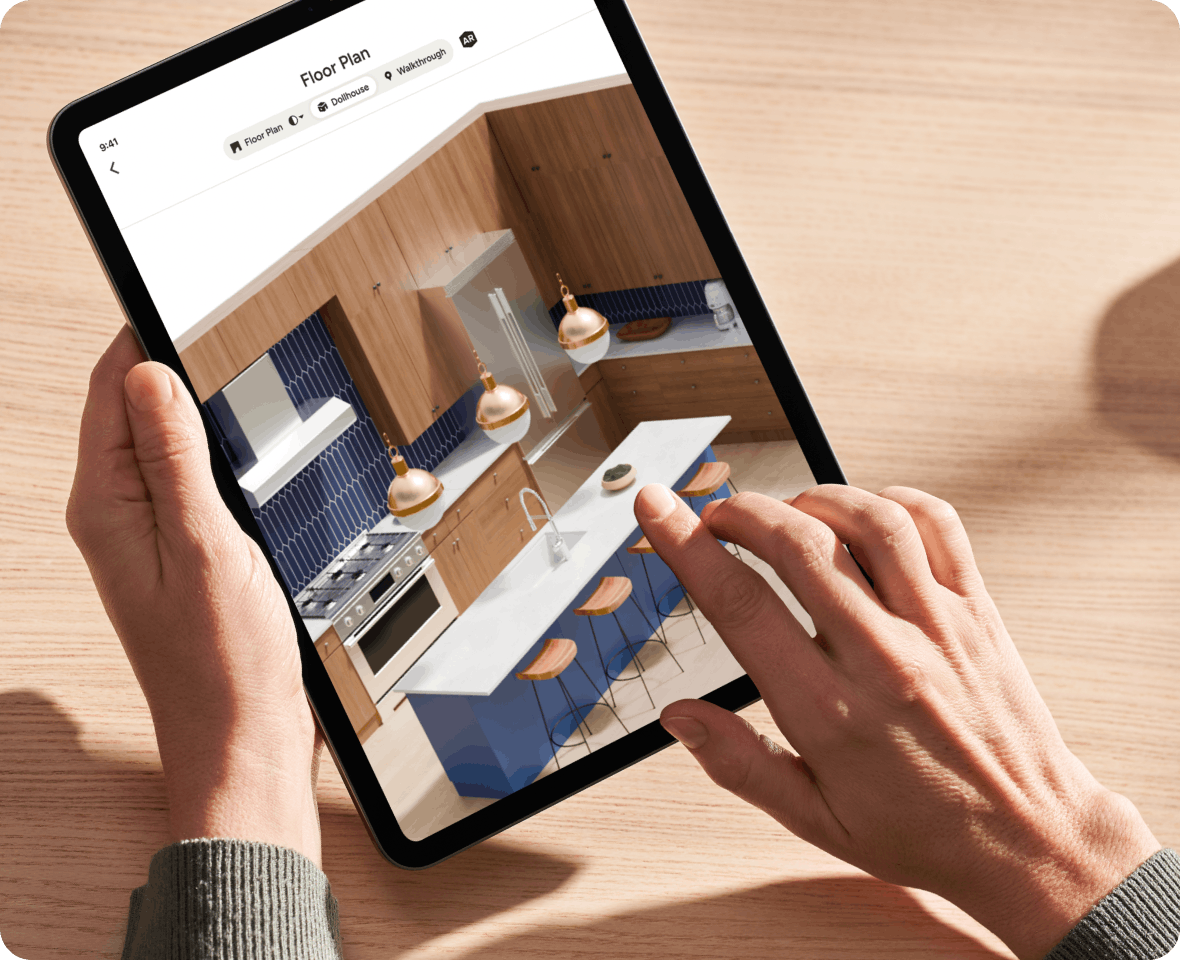
- Instant 3D floor plans: AI transforms site measurements or room scans into interactive 3D floor plans, allowing you to test layouts during early conceptual design.
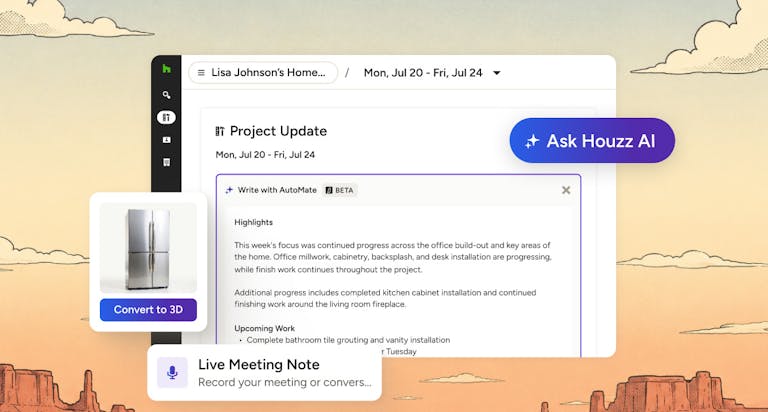
- Product-to-3D models: Modern AI tools convert product photos into 3D models, helping clients see how actual furniture and finishes look in their exact space.
- Fewer site visits and revisions: By allowing clients to visualize choices early, designers eliminate endless back-and-forth revisions. Firm owners report that 3D room scanning removes the hassle of loading and unloading multiple sample options for clients.
Connecting Selections to Itemized Estimating
The transition from design concept to signed contract is where momentum often stalls. Creating detailed estimates manually leaves room for missing line items and budget friction. An AI estimating agent turns preliminary concepts into accurate, itemized proposals.
- Automated line-item generation: AI expands broad scope notes into detailed itemized estimates using your past pricing history and current local labor and material rates.
- Scope and margin protection: The system flags potential budget gaps, missing allowances or pricing anomalies before proposals reach the client.
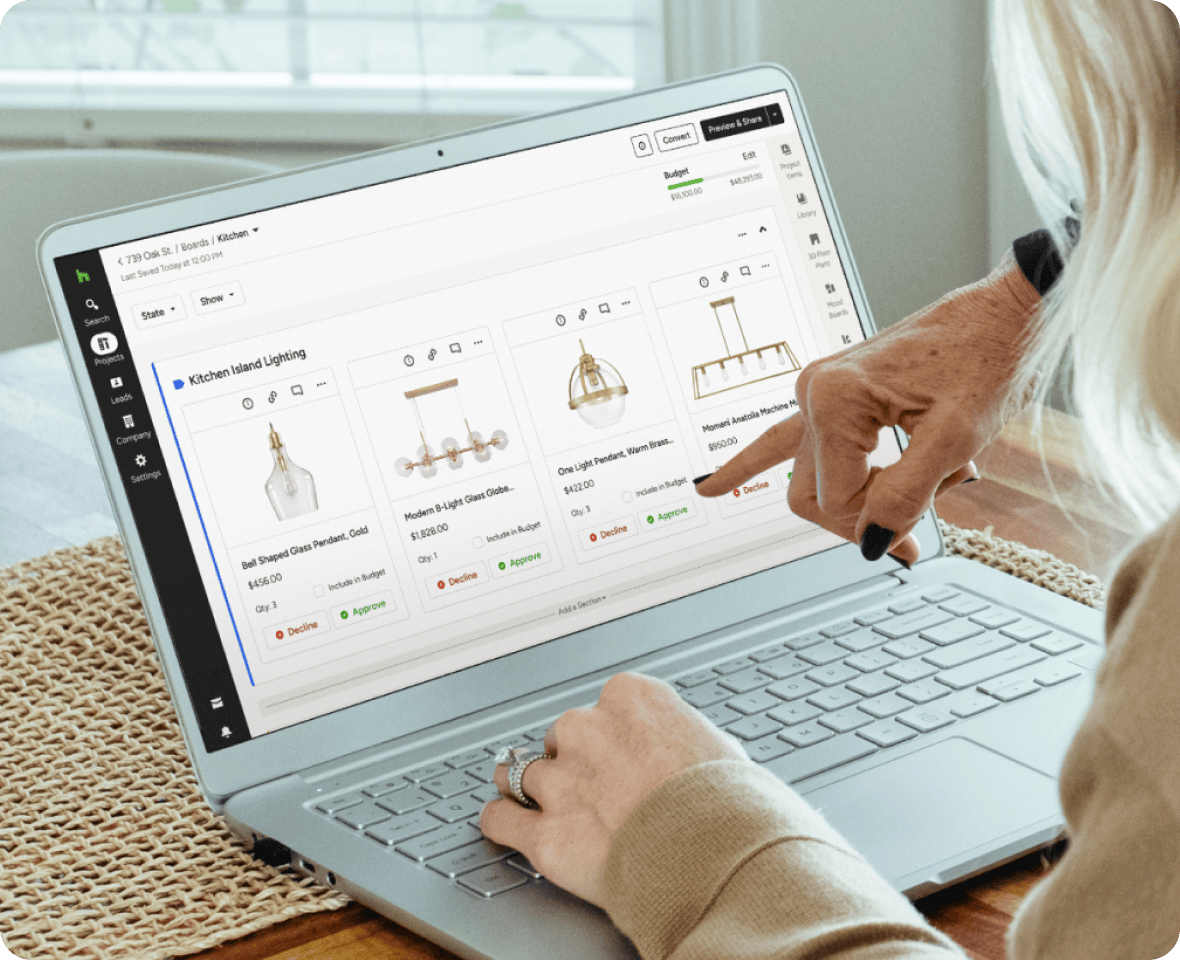
- Interactive selections portal: Once an estimate is approved, each allowance automatically populates a client selections portal with assigned budgets, category deadlines, and approval tracking.

Operating From One Source of Truth
Managing a growing firm across five or six disconnected software platforms leads to miscommunication and administrative overload. Industry-focused platforms like Houzz Pro bring client communication, design development, selections, procurement and financials into a unified system.
Operational Area | Traditional Manual Approach | Industry-Trained AI Workflow |
|---|---|---|
Client Inquiries | Manual email replies days later | Instant, personalized responses and lead scoring |
3D Visualization | Hours spent building models manually | Instant 3D renders generated from product photos and scans |
Estimate Creation | Manual spreadsheet calculation | Itemized proposals drafted from historical studio data |
Selections & Approvals | Chasing decisions over email threads | Centralized client portal with real-time budget tracking |
Project Financials | Manual invoice tracking at month-end | Milestone invoicing and automated payment reminders |
Firms adopting unified AI workflows report dramatic time savings. For example, firms like Etch Design Group save 30 to 35 hours weekly by consolidating tools, while others like Kyle Hill Design have reduced administrative time by two-thirds, allowing them to scale their active project load without taking on extra staff.

Automated Financial Operations and Client Updates
Keeping clients informed while protecting studio cash flow is crucial for long-term health.
- Milestone invoicing: Invoices generate automatically as project milestones or selections are approved, keeping payments aligned with work completed.
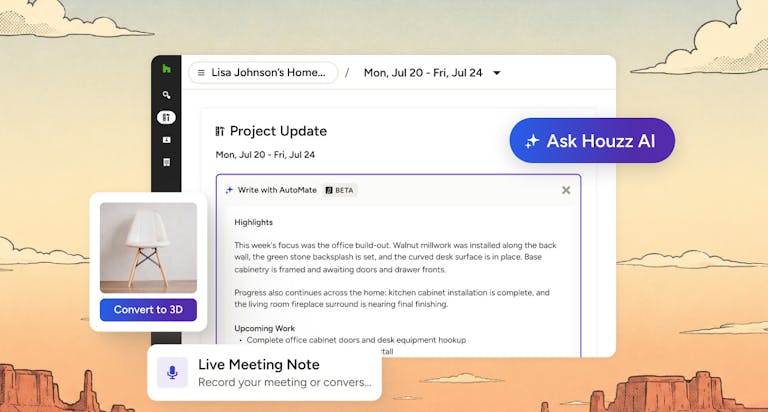
- Automated progress summaries: AI translates site logs and task completions into polished, client-facing updates, keeping clients reassuringly informed without requiring evening reporting hours.
- Budget vs. actuals tracking: Financial AI tracks actual expenses against estimated budgets in real time, alerting designers to potential overruns before costs are locked in.
The Takeaway: Spend Less Time on Admin, More Time on Design
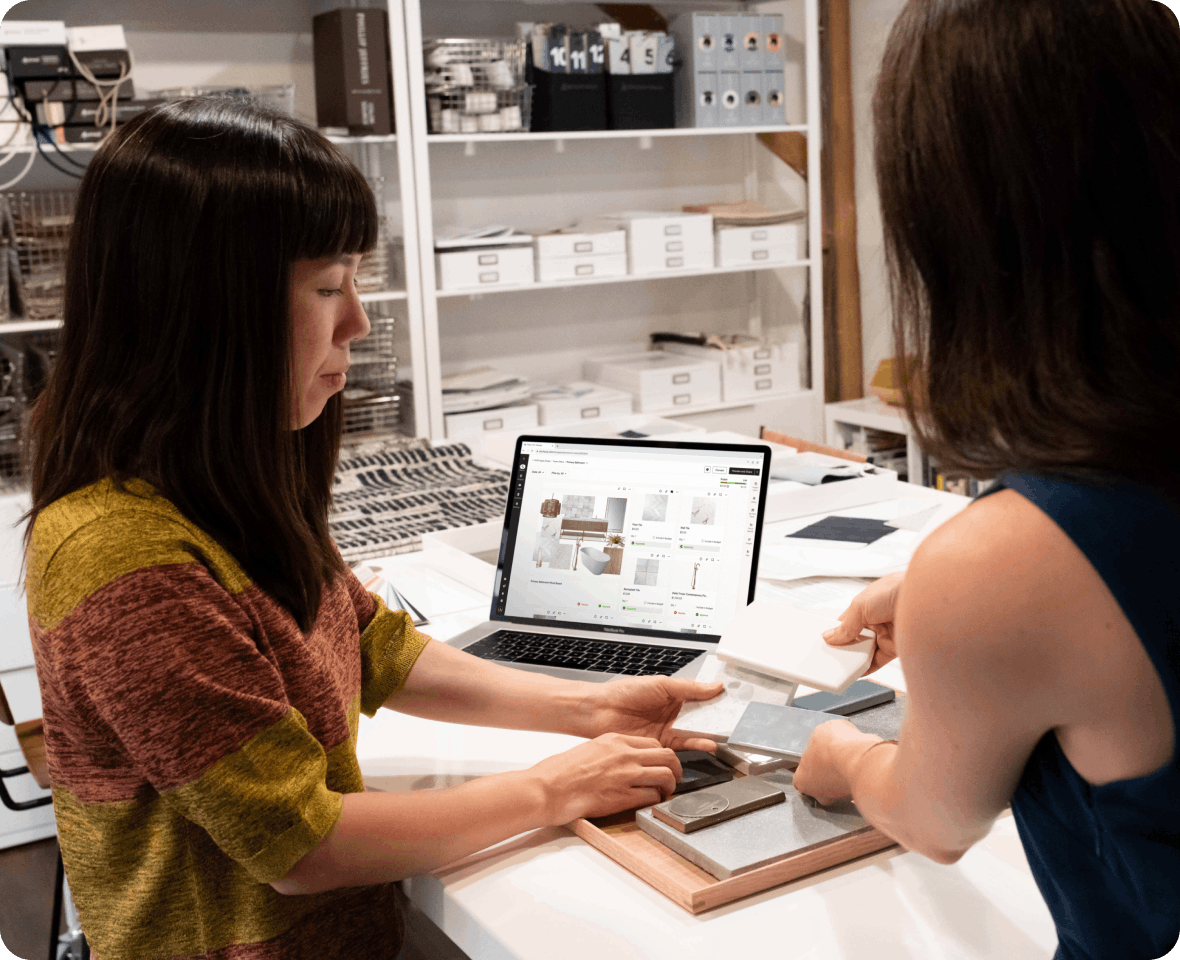
AI is not here to replace the designer’s creative eye or human intuition. Rather, industry-trained AI acts as a dedicated studio partner—handling backend coordination, administrative paperwork, and routine follow-ups.
By moving from fragmented software tools to a single platform powered by Houzz AI, interior designers can protect their margins, deliver a high-touch client experience, and get back to doing the work they love.
Design the future with AI today by scheduling a personalized demo or trying Houzz Pro free.


Want advice delivered to your inbox?
Unlock industry insights and updates for contractors and design pros
By signing up, I agree to the Houzz Terms of Use and Privacy Policy and that Houzz may use my information to contact me about relevant content, products, and services.