Software Overload is a dead weight on designers. With AI we’re cutting it loose.
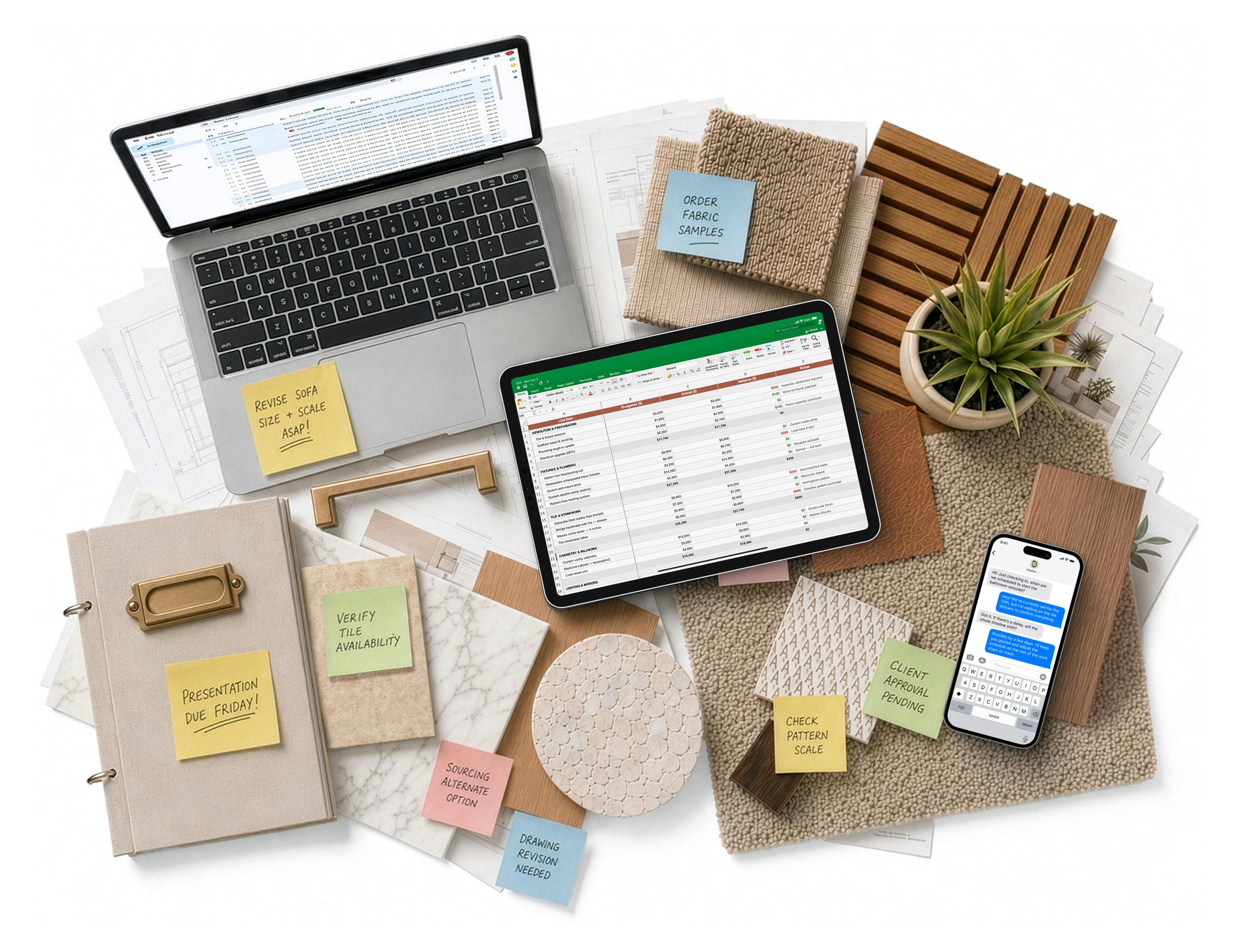
Over the years, design studios have invested in a host of software systems with the goal of making project work easier. Instead, they’ve been burdened with a mess of disconnected tools. Each one was brought on to solve a specific problem, but ultimately they created a much bigger one: Software Overload Syndrome (SOS).
With the rapid rise of AI, firms are feeling both pressure and opportunity to drive productivity improvements. But they find getting value from AI feels like another chore—yet another tool to feed with data, train, and manage, with added security and accuracy concerns to boot.
I talk to growing, successful design powerhouses who know they are working way too hard to profitably deliver great projects. They tell me:
- No single source of truth exists for teams across project phases.
- Real-time financial visibility is missing, obscuring true profitability and key metrics until it’s too late.
- Tools are clunky and hard to learn, causing friction and slow adoption for new team members.
- Data re-entry is persistent because disconnected systems don’t talk to each other, increasing the risk of errors.
- Software features go unused, with teams often paying for bloated tools while only utilizing a small fraction of what’s there.
- Valuable time is wasted on low-value data entry instead of client work.
- IT management is overwhelming, making it feel like you need a tech expert on staff just to keep the systems running.
- AI feels like the Wild West, where firms are experimenting and no clear standards exist.
If any of this sounds familiar, then you already know the pain of Software Overload Syndrome. It’s what happens when firms keep adding more tools, then find they aren’t seeing the return they were promised because the systems are too complicated, information is stuck in separate places, or the team just doesn’t want to use them. And now, getting value from AI requires urgently addressing Software Overload.
SOS isn’t about being “bad with tech.” It’s a systems problem that creates enormous operational drag. Our industry deserves better.
How We Got Stuck
It’s easy to understand how we got here. In the early days, little dedicated tech was available to our industry. As technology evolved, motivated team members across sales, design, planning, project management, and finance adopted specialized tools to address their own workflows.
But now these systems are holding companies back because they don’t work together. Key information is located in different systems, which makes getting visibility into the details challenging and inefficient. Our survey found that the average studio now uses an average of six different systems, and some juggle up to 14.
That operational drag has a real business cost. Field and in office teams fall out of sync, there’s lack of true transparency into profitability, efficiency suffers, errors increase, and costs quietly creep up. Tools that are too complicated to learn and use mean that teams don’t fully adopt them. Information escapes into informal channels. And these issues compound as your business grows.
Leave the Dead Weight Behind, Powered by AI
Our research shows that more than 1 in 3 firms have already adopted AI for business use, and it’s got incredible potential. But AI can’t see across disparate software tools and data sources without major manual effort, and that’s a drag.
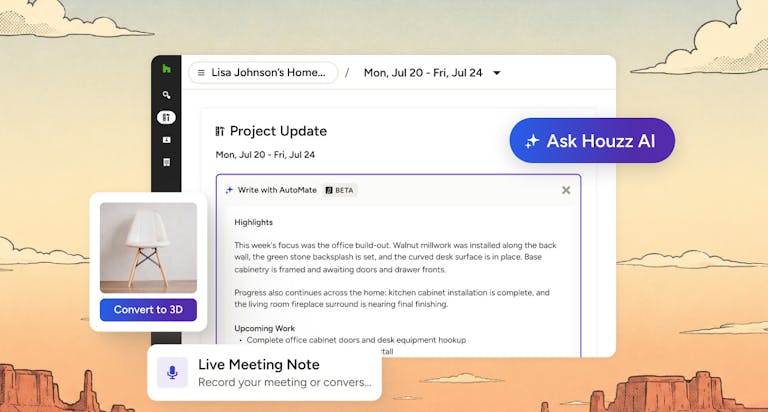
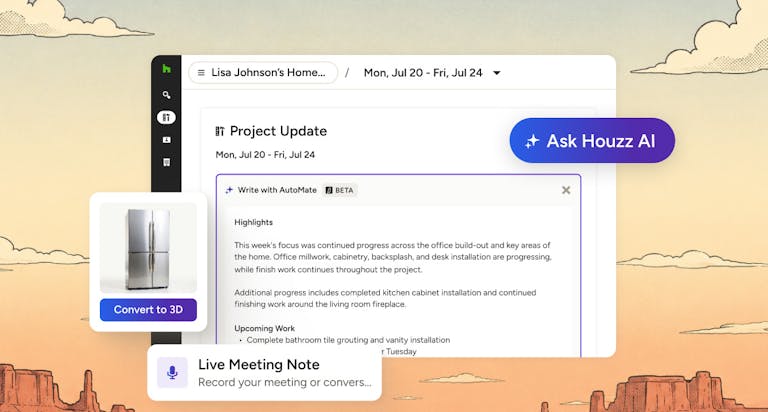
Houzz AI is better—it’s been trained to understand our specific industry. It sees across sales, design, and procurement workflows. It automatically learns your brand voice, so you can respond to clients faster. It can uncover business insights or issues and push information to the right teams, all without manual work on your part. You want your company and client information to be safe and secure and not have to learn—and train—yet another software tool.
Breaking Free: How Firms Are Lightening the Overload
The good news is Software Overload Syndrome is by no means a permanent condition. Simplifying systems into a single source of truth increases clarity, profitability, and job joy, improving employee retention and reducing miscommunication and re-work.
Firms across the country are saying enough is enough. They’ve left the drag of SOS behind by running on Houzz AI:
Design by the Jonathans, in New Haven, Conn., centralized sourcing, proposals, and purchasing on Houzz Pro, and their team of nine now operates in total sync. They’ve managed over 800 projects with full cash-flow visibility, giving founder Jonathan Gordon the ultimate unweighting: peace of mind.
Etch Design Group in Austin, Texas, was managing 50+ active projects and feared they would need to piece together six different platforms just to keep up. The move to Houzz Pro saved them 30–35 hours a week in busywork and cut admin costs by 20%, proving that you can scale up without weighing down.
For Davis Interiors in Minneapolis, Minn., adopting Houzz Pro was like hiring a virtual office manager, saving the team 25–30 hours a week. The result? They cut overhead costs by 15% and doubled their project capacity.
These are wins changing the trajectory of these firms and our industry. Clients see professionalism and transparency. Teams have greater alignment. Firms grow revenue and profits. AI enables immediate productivity improvements.
Technology shouldn’t add complexity; it should remove friction. That’s only possible on a modern, industry-specific system that’s your single source of truth. That’s what Houzz Pro was designed and built for.
Design firms that run on a single system will be more profitable, stay nimble, and thrive in this age of AI.
If you’re ready to leave Software Overload Syndrome behind, see Houzz Pro in action with a personalized demo or try Houzz Pro free today and feel the difference of running your business in one connected software system.


Want advice delivered to your inbox?
Unlock industry insights and updates for contractors and design pros
By signing up, I agree to the Houzz Terms of Use and Privacy Policy and that Houzz may use my information to contact me about relevant content, products, and services.