When Clients Come Knocking
We all know the importance of building your brand and optimizing your online presence on Houzz so new clients can find you, but once they reach out, then what?

Getting inquiries from new clients is exciting. You get to meet new people with ambitious ideas for projects big and small. However, fielding every piece of potential business can be time consuming.
Creating a lead screening process to find the right clients for your company is an essential step in growing your business. It may be tempting to pursue every lead that comes your way, but that could lead you to chase opportunities that aren’t the right fit or the best return on your investment.
Equip yourself and your team with the right tools and processes to help you screen leads efficiently and effectively so you can save time, increase your win rate and maximize your return. Whether you’re just starting out or have been in the industry for years, we’ll show you tried and true tactics to close the quality leads that will bring the most benefit to your business.
Take It From These Successful Pros
“Knowing and targeting your ideal client is so important. Having a lead screening process is a time honored, common sense proven practice, that benefits both our clients and our firm.”
J. Schwartz, J. Schwartz Design
“Over the years, we’ve managed to refine our marketing to attract our ideal clients who love to dream big and challenge our creativity and capabilities. More so, they can write the checks to accomplish some pretty amazing homes.”
John Nanke, Nanke Signature Group
“Advice I received from another architect: Sometimes you make more money on the projects you don’t get.”
John Hrivnak, Hrivnak Associates

You Can’t Hit a Target You Can’t See
Define Your Target
The first step to finding your ideal client is to know who they are. Do you know what your ideal client looks like? What kind of projects are they planning? How old are they? How much money do they want to spend? Do they have a family? Where does your ideal client live?
If you’ve never thought about these questions, now is the perfect time to start. If you’ve already done this exercise, it never hurts to update your target. Your business objectives may have changed, or it may help you reaffirm your direction.
Once you begin focusing on certain types of clients, you may attract more of them. As the old adage goes, birds of a feather flock together, and referrals also help bring in your ideal clients.
An ideal client profile is a tool you and your team can use to identify the specific segment of customers that will bring you the best business. On the following pages, we have created an Ideal Client Profile Worksheet you can fill out and put someplace to use as a reference when fielding leads. Additionally, pass it around the office so the rest of your team can keep sales goals aligned.

"Knowing the profile and demographics of your ideal client makes it easy to screen any inquiry you receive. For instance, my ideal clients are busy people who want an interior design firm to handle everything from concept to completion.”
Barbara Gilbert, Barbara Gilbert Interiors

Think Realistically
It’s important to remember that although ideal client profiles are fictional personas, they should be based in reality. Look at your current and recent clients and identify the ones you enjoyed working with most and the types of projects that brought you the best business.
Model your ideal client profile on those past projects for a realistic target you’re more likely to hit. It may sound counterintuitive, but the more specific you make your ideal client profile, the stronger it will be. A detailed profile allows you to focus your search and screening processes to find exact areas and client types that will grow your business.
"Marketing to the masses is a waste of time and money. Marketing to a smaller, select group with specialized needs makes life so much easier—and more cost effective.”
Terri Maurer, Maurer Consulting Group
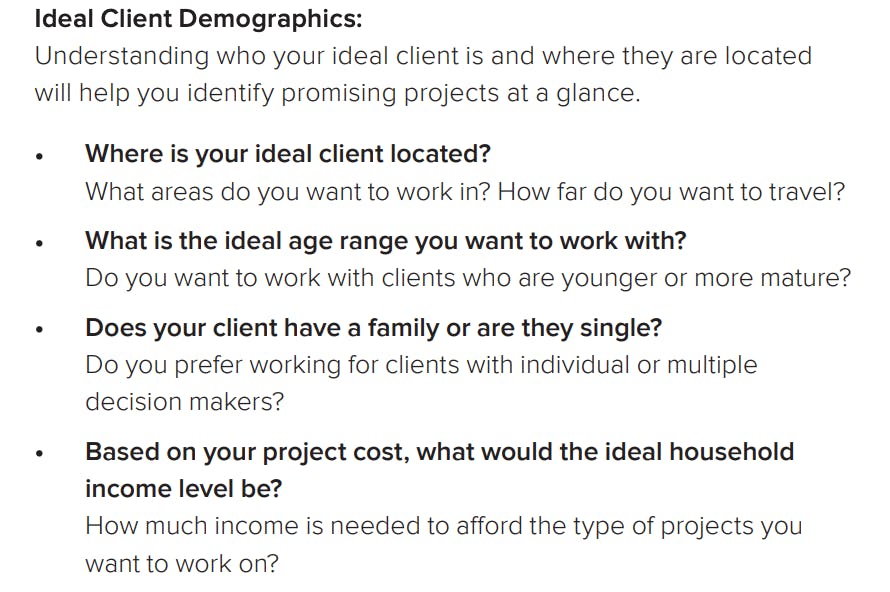
Ideal Client Profile Worksheet
Goals of the Worksheet
Save time, increase your win rate and maximize your return by creating an ideal client profile. Knowing what your ideal customer and ideal project looks like will simplify screening inquiries and qualifying leads.
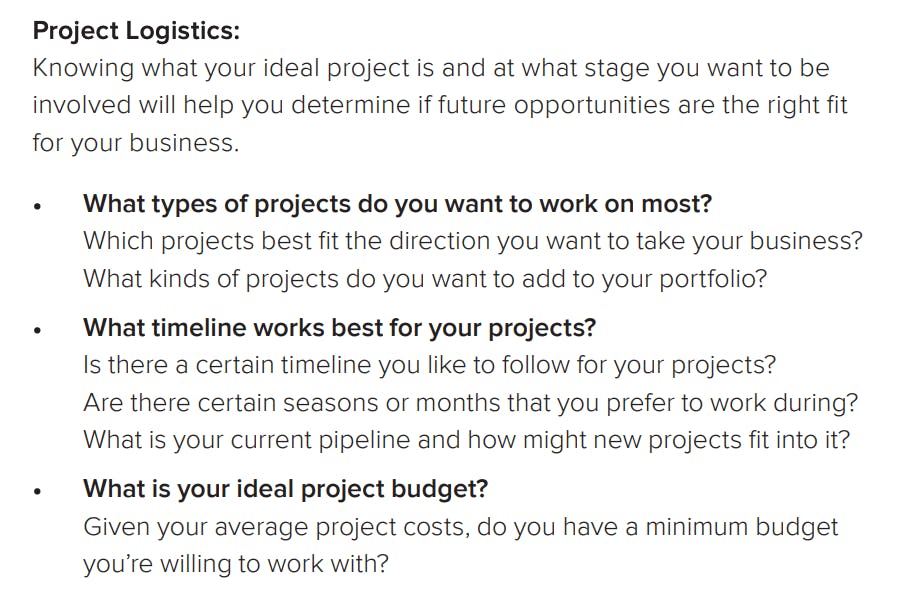
Master the Discovery Call
Now that you have your Ideal Client Worksheet filled out, it’s time to master the discovery call. The discovery call is the first major interaction with a client and the most important step in screening a lead and landing the right business.Learning how to handle initial client calls can streamline your evaluation process and close deals more efficiently. Ideally, the discovery call will give you a good idea whether or not the lead is promising. Refer back to your ideal client profile and see if the potential client matches up with your business goals.
Skip the Selling
This conversation shouldn’t be about selling or pushing your services; it should be about learning who the clients are and what they want to accomplish. You will not only get a better idea of the project, you will also find out what it might be like to work with them on a daily basis. Using this time to ask the right questions and be a good listener will give you the right tools to determine whether a client is a good fit and build trust for future interactions.
Ask each of the questions on the following pages to make sure you’re making the most of your discovery call.
How Did You Learn About Us?
This is the most important question to ask for two reasons. The first is that it will help you determine how much potential clients know about you. If they found you on Houzz, they may have seen some of your work or read reviews and already have a good idea of your business, which means the process may run more smoothly from the outset.
If they heard about you via other channels, they may need more questions answered. This information will help guide the conversation and help you understand how much time and energy it may take to get them up to speed.
In addition, if you spend money or time on any kind of marketing, you should track results to determine the return on your investment. Recognizing which channels are benefitting you most will help guide your efforts and help you gauge where you might want to spend more moving forward.
Did You Know?
With Houzz Pro, you’ll have access to a Lead Management system which allows you to track business inquiries and follow up with potential clients. Any inquiries from Houzz will automatically be seen there, but you can add leads from other sources to manage them all in one convenient place.

What’s the Timeline?
Knowing the timeline expectations for any prospective client is a basic necessity. Does the timeline fit with your project pipeline? Do you have the manpower and energy to accommodate their needs? These are all basic logistical questions, but asking follow-ups can lead to a better understanding of the situation. Why are they doing this now? Do they finally have financing, or do they finally have the time? What else might be holding them back?
Pros on Houzz tell us the top way they know a client is serious about taking on a project is if they have a timeline decided. Studies show that a person is more likely to complete a task if they have committed to a time to do it—even if it’s in the future. This information can reveal a lot of important contextual information you’ll need to effectively screen the lead.
“Your timeline should be discussed with confidence using realistic projections. It is better for clients to expect the job to take longer than they expect than to have false expectations. Far too often I have seen tradesmen give unrealistic timelines just to make the client happy and secure the job only to disappoint the client later on when they don’t fulfill said timeline. Your client will respect you for telling the truth!”
Positive Woodworks
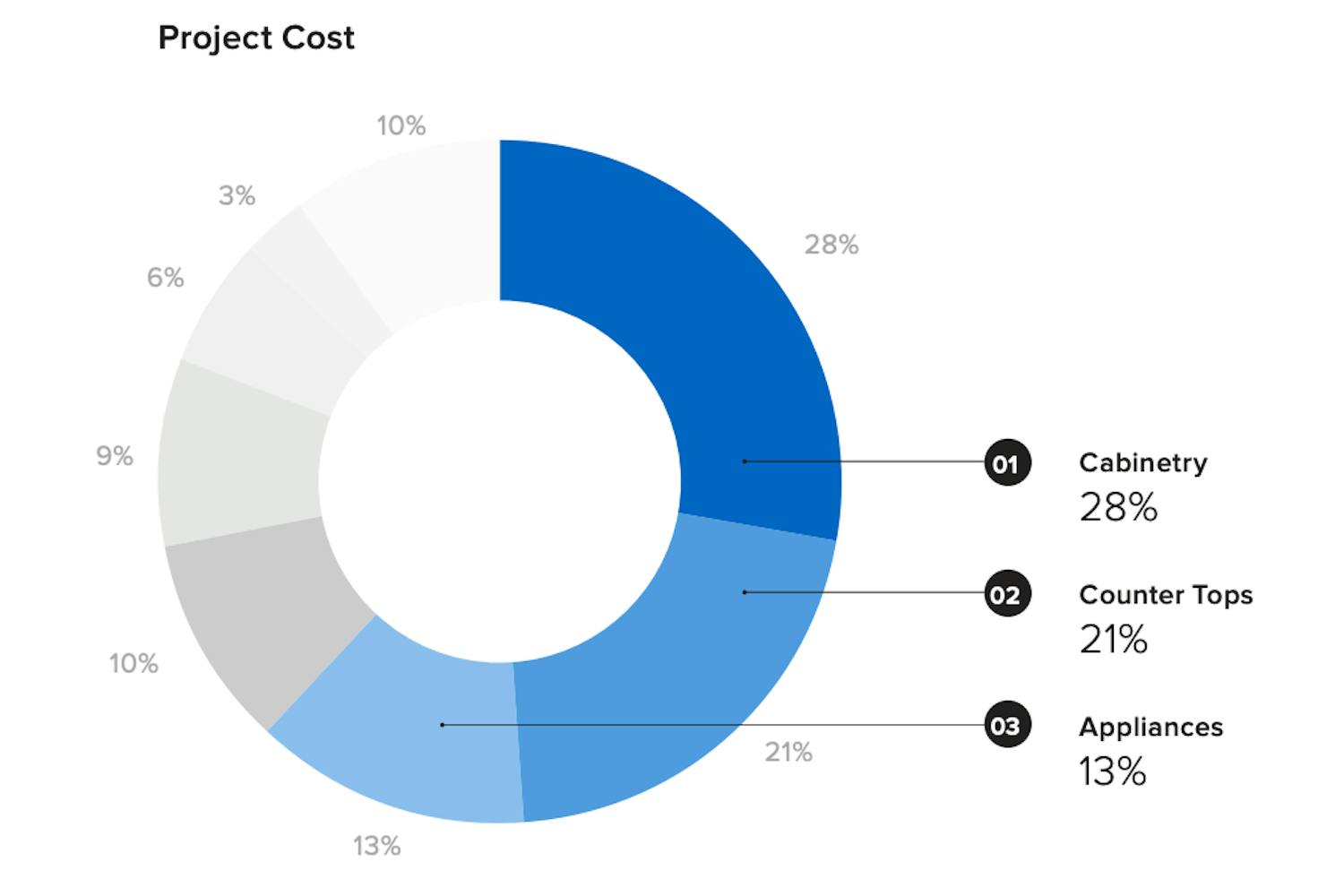
What’s the Budget?
Make sure the budget not only aligns with your rates, but also your business goals. Is the homeowner ready to spend the money required and how will they finance the project? If they balk at your prices, explain to them the value you offer and the services you provide. Be ready to present to them the unique value you bring to the table. Spending a little time to educate potential clients can go a long way.
For more information on working with clients regarding reframing their expectations of renovation costs, check out our handout here.
“I can’t express strongly enough the importance of educating our clients and having them understand the value which we bring to their project. In a few cases the client is not concerned with value, but is only interested in cost. These are not the clients that we align with and are willing to pass on the project.”
Harold Remlinger, DesignTeam Plus

Who Has the Authority To Make Decisions?
Often times industry professionals and clients will come to a decision only to find out that it needs to be discussed with the spouse or kids before final approval. Despite all of the hard work you put in to get to that point, you still can’t move forward and work gets stalled. Surprises like that can come at a huge expense if that means additional work, changing orders for material or delaying plans, so getting to know the dynamics of the household is essential to project success.
“The most important thing I do is try to ensure that all parties involved in the decision process are at the meetings. I can’t tell you how many times I’ve had a great meeting and come up with a game plan only to find out that others involved had a different vision. If anyone has the power of veto, I ask that they be present.”
Jared Lewis, Lewis Design-Build Remodel
What’s the Purpose Of the Project?
Simply asking “why?” can lead to a lot of important information. Determining what a homeowner hopes to accomplish will give you a better idea whether you’re ultimately able to meet their vision. Are they trying to create a nurturing home environment for a growing family? Do they want to build a dream space for an aging parent? If what you stand for as a professional matches up with the purpose of their project, it may serve as instant common ground and give you an advantage to closing the deal.
Keep the Conversation Moving
Providing Next Steps
So you just finished a great discovery call with a very interested client who also fits your Ideal Client Profile, but once you hang up you realize you don’t know what’s next. Has this ever happened to you? How do you make sure you don’t end up with a sales process that leaves both you and your client hanging?
Determining next steps should be a part of any client meeting, and is crucial for making sure you can move forward and close the deal without any hiccups. Without next steps in place, the timeline for closing the sale could get bogged down with scheduling conflicts, or you could play a never-ending game of phone tag, costing you unnecessary time and energy.
“Ideally we set up the next meeting or at least a time frame within which to follow up before concluding each meeting or phone call. Never end a meeting or an appointment without an agreement and a time frame for the next step.”
David Buchsbaum, Atlanta Closet & Storage Solutions
Steps to Keep the Client Engaged
- Recap The Meeting. Summarizing the key points of what was discussed helps you to keep accurate notes and shows your client that you have been listening to their needs.
- Discuss Tasks. Share what you need from the client, such as a Houzz Ideabook, and then the next action you’ll take, such as when you’ll follow up or when you can share an estimate or proposal.
- Discuss Timing. Giving a deadline for the deliverables or setting a next firm meeting date sets expectations for the client about their involvement in the project and ensures all parties are in agreement about the time frame of the project.
- Request Feedback. Ask if there is anything you’ve missed or that the client would like to add to the to-do list. It covers your bases and lets clients know their involvement is a valuable part of the process.

Closing The Deal
Heading into the final meeting to close the deal can seem like a lot of pressure, but it doesn’t need to be.
The breadth of your website and Houzz profile, the quality of your photos, how you handle the discovery call, screening the lead against your ideal client profile and following up are all vital elements in the closing process. If done correctly, each step should contribute to the client’s eagerness to hire you.
Did You Know? Houzz Pro members can receive access to our client support team who can help manage your Houzz profile by uploading photos and requesting reviews to help attract your ideal clients.
“I prefer to start the closing process long before they’re ready to close. I want to build my brand online with great photos and reviews that they’ve already decided they want me before we even talk. Then from the very first call to the consultation to the follow up emails, everything has to build on each other so by the time you sit down to close the deal, it’s more of an inevitability than an opportunity.”
Dave Marciniak, Revolutionary Gardens
Tips for Closing
- Meet Up. Many pros operate with an in-person final meeting to collect a signature on the contract and a check for the first payment installment. Now with Houzz Pro, you can send an electronic estimate or proposal via email and collect payments online. Still, offering a meeting or video call instead to answer any final questions before the client signs can allow you to address concerns and close the deal.
- Offer Reference Clients. Giving potential clients an opportunity to ask past clients about their experience is one great way to gain trust and credibility fast. Eugene Sakai of Studio S Squared Architecture sends a client reference list with names, addresses, emails and phone numbers. Although most clients are happy to show off their houses, Sakai gives everyone an opportunity to opt out in order to preserve their privacy.
- Don’t Be Afraid to Walk Away. Sometimes, even after a discovery call and a site visit, the client or project just isn’t the right fit. If expectations, personalities, design styles, or logistics just don’t match up, you can save yourself the frustration and stress that comes from trying to make it work. If it’s not a fit, decline professionally, and if you know of another pro who couldbe a better fit, refer them.
Business Growth and Management
If you’re interested in growing your business and attracting more of those ideal clients, Houzz Pro can help.
Houzz Pro showcases your expertise, matching you with leads for the projects and locations you want most. You’ll also get premium branding features including a custom overview video, business headline, a featured review, and the ability to upload project video to your profile. Houzz Pro can also create and host a responsive website that pulls content from your Houzz profile, making your online branding consistent.
Manage business inquiries through our customer relationship management tool to keep track of all of your clients in the sales cycle. Then, facilitate projects with the project management tools including our easy-to-use estimate or proposal creation tool, online payment collection, moodboards, and 3D Floor Planner. Plus, you’ll get support from our client success team along the way.

“I really like having everything in one place. It’s much easier to stay in one tool and go from leads to projects and then sourcing. With the CRM, you don’t forget to follow-up and you can see status, it’s a great feature. I was looking for a CRM and now I have one included as part of Houzz Pro.”
Sheeja Nair, Raashi Design


Want advice delivered to your inbox?
Unlock industry insights and updates for contractors and design pros
By signing up, I agree to the Houzz Terms of Use and Privacy Policy and that Houzz may use my information to contact me about relevant content, products, and services.