Beyond Generic AI: How Residential Contractors Can Automate Workflows to Scale
Where generic chat tools fall short, and industry-trained AI agents will help contractors win jobs faster, protect margins and eliminate the communication black hole.

Residential builders and remodelers are delivering incredible work, but they're working far harder than they should to do it. Between running jobsites during the day and spending evenings buried in administrative tasks, most contractors are caught in a relentless cycle. While artificial intelligence feels like the next major opportunity to get ahead, for most pros generic AI tools feel like yet another chore to learn, feed and manage.
The core problem isn't a lack of effort; it's an infrastructure gap. Most contractors are already running their operations across 6 to 14 disconnected software tools that don't talk to each other. When you attempt to plug generic large language models (LLMs) into that fragmented ecosystem, you only increase the tedious copy-paste workload and introduce new error risks. AI must work for your business—not the other way around.
The industry's most profitable remodelers and builders are moving away from standalone chat tools and adopting all-in-one platforms with industry-trained AI agents embedded directly into their workflows. Here is how four coordinated agentic workflows will modernize residential construction from first inquiry to final retainage release.

The Always-On Lead Machine: Speed Without Sacrificing Quality
Today, contractors face an impossible tradeoff at the top of the funnel: respond fast with generic, unprepared replies, or respond well with a tailored message when you finally get back to your desk—often too late. In fact, industry CRM data reveals hundreds of active leads sitting dormant for more than 600, 800 or even 1,200 days without meaningful follow-up simply because pros are busy running jobsites.
The moment an inquiry arrives is the highest-value moment in the business lifecycle. Everything downstream depends on winning it. Instead of relying on passive reminders, modern workflows deploy an always-on sequence powered by coordinated AI agents.
Workflow 1: Inbound Lead to Fully Qualified Meeting and Estimate
- Instant scoring and acknowledgment: Within 60 seconds of an inquiry arriving via web form, phone or marketplace message, a sales agent evaluates the lead against your historical project fit, geographic area and availability. It drafts a personalized response in your exact tone for a simple "one-tap" review and send.
- Automated qualification: The agent asks structured follow-up questions to establish budget ranges, timelines, and decision-making authority before you invest uncompensated time.
- Ballpark estimating in the background: Once qualified, context is handed directly to an estimating agent. It analyzes your historical pricing on similar jobs alongside current local labor and material costs to build an itemized draft estimate.
You arrive at the very first client consultation with a lead score, conversation history and a realistic ballpark estimate already in hand, putting you in an entirely different league than competitors who show up with a blank notepad.
The Automated Kickoff: Locking Scope and Protecting Margins
The gap between a promising consultation and a signed contract is where revenue leaks and momentum dies. Manual estimating is notoriously slow and inconsistent, and client selections—material finishes, fixtures, and appliances—often cause projects to stall before demo even begins.
Because volume bidding requires precision, even a 1% margin improvement can translate into $500,000 in revenue for a growing home remodeler or builder. To protect profitability, contractors are leveraging AI to guide the refinement and contract phase.
Workflow 2: Ballpark Estimate to Signed Contract and Selections
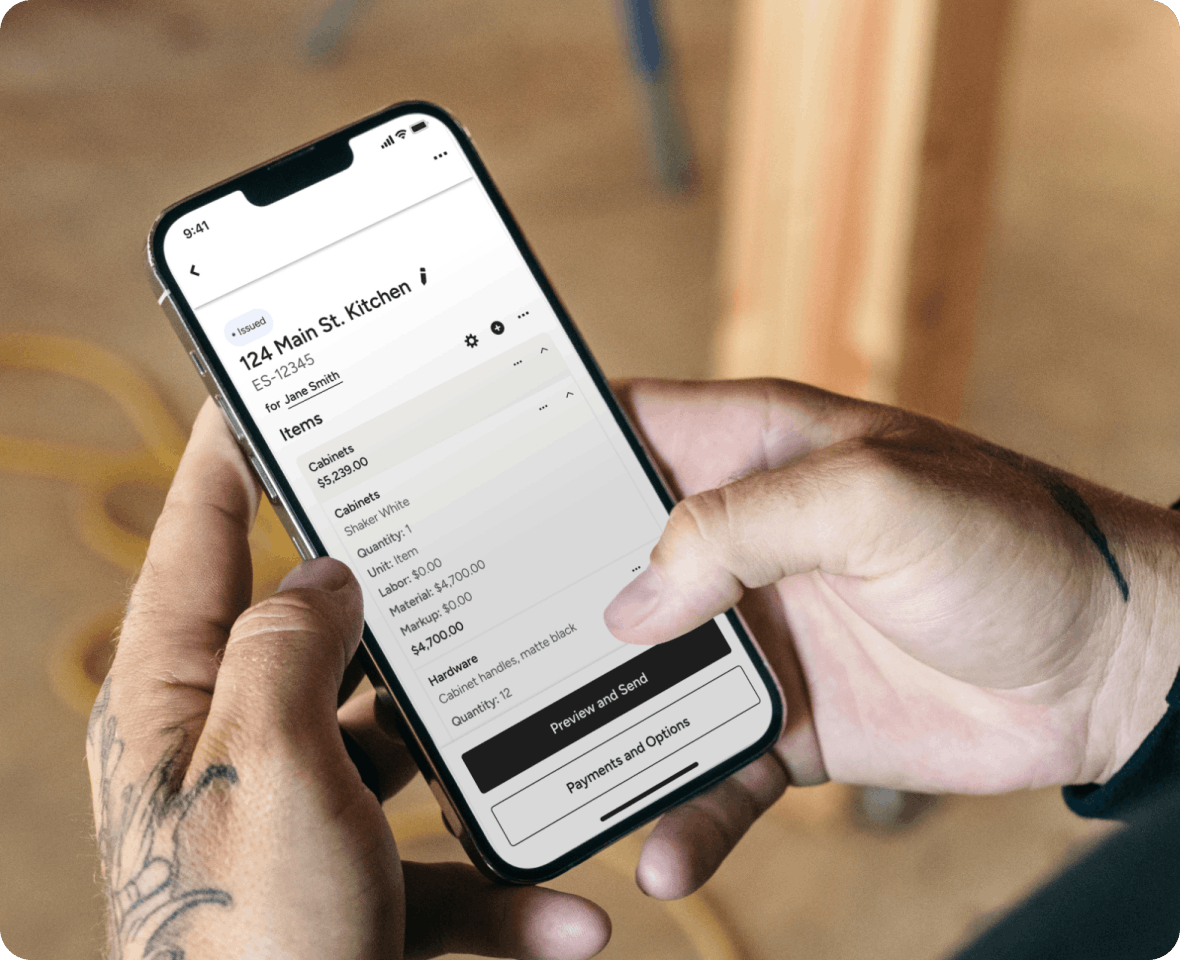
- From ballpark to itemized breakdown: The estimating agent expands preliminary line items into a comprehensive scope, flagging material cost deviations and missing allowances before the quote reaches the client.
- Closing the post-approval gap: When a client digitally approves an estimate, the platform automatically generates a draft contract from your legal templates, pre-populated with locked scope, dates and payment milestones. What takes manual hours on legacy platforms happens instantly.
- Structured selections portal: Every allowance item converts automatically into a client-facing selection task with clear budget allocations and deadlines, eliminating the endless email chasing that delays job kickoffs.

Proactive Project Ops: Eliminating the Communication Black Hole
Winning the job and locking the scope is one challenge; executing without surprises is another. The vast majority of client disputes and negative reviews in home construction stem from the execution phase, when on-site communication breaks down and homeowners feel left in the dark.
At the same time, a contractor managing three active jobs cannot personally track every subcontractor, material delivery and schedule dependency daily. Modern agentic operations bridge field execution with client transparency without creating administrative burdens for field crews.
Workflow 3: Approved Scope to Mobilized Crew and Site Visibility
- Frictionless field logging: Crew members and project managers capture daily site progress via simple voice-to-text walkthroughs and mobile photos. The system automatically structures these inputs into formal daily logs attached to the correct project milestones.
- Intelligent exception alerting: You do not need an alert for every completed task. AI monitors for exceptions—such as an unconfirmed sub assignment, a failed inspection, or a weather forecast threatening exterior work—and surfaces actionable recovery solutions.
- Proactive client updates: To cure client anxiety around schedules and budgets, the system drafts polished, client-appropriate progress summaries (with photos) for your review and approval before sending.

Financial Oversight: Cash-Flow Forecasting and Fast Collections
For residential builders and remodelers, cash flow is paramount. With significant accounts receivable tied up in active builds, getting collections in even one week faster represents significant working capital. An integrated financial ops agent works directly from the approved estimate and change orders to safeguard cash flow.
Workflow 4: On-Time Payments to the Financial Health of Every Job
- Milestone-triggered invoicing: Invoices are automatically generated and delivered as field milestones are marked complete. Clients can pay digitally via payment links, drastically reducing average days outstanding.
- Work-in-progress (WIP) and retainage tracking: The system maintains automated WIP summaries—tracking billed-to-date, cost-to-date, and projected final margins—which are vital for bonding, financing, and tax-ready year-end reporting. Retainage balances (5%–10% withheld) are tracked separately and billed automatically upon project close.
- Predictive cash-flow scenarios: By evaluating scheduled project billing against committed purchase orders and subcontractor liabilities, the system projects cash flow 30, 60, and 90 days out—alerting you to potential shortfalls before they impact weekly payroll or material ordering.
One Platform, One Source of Truth
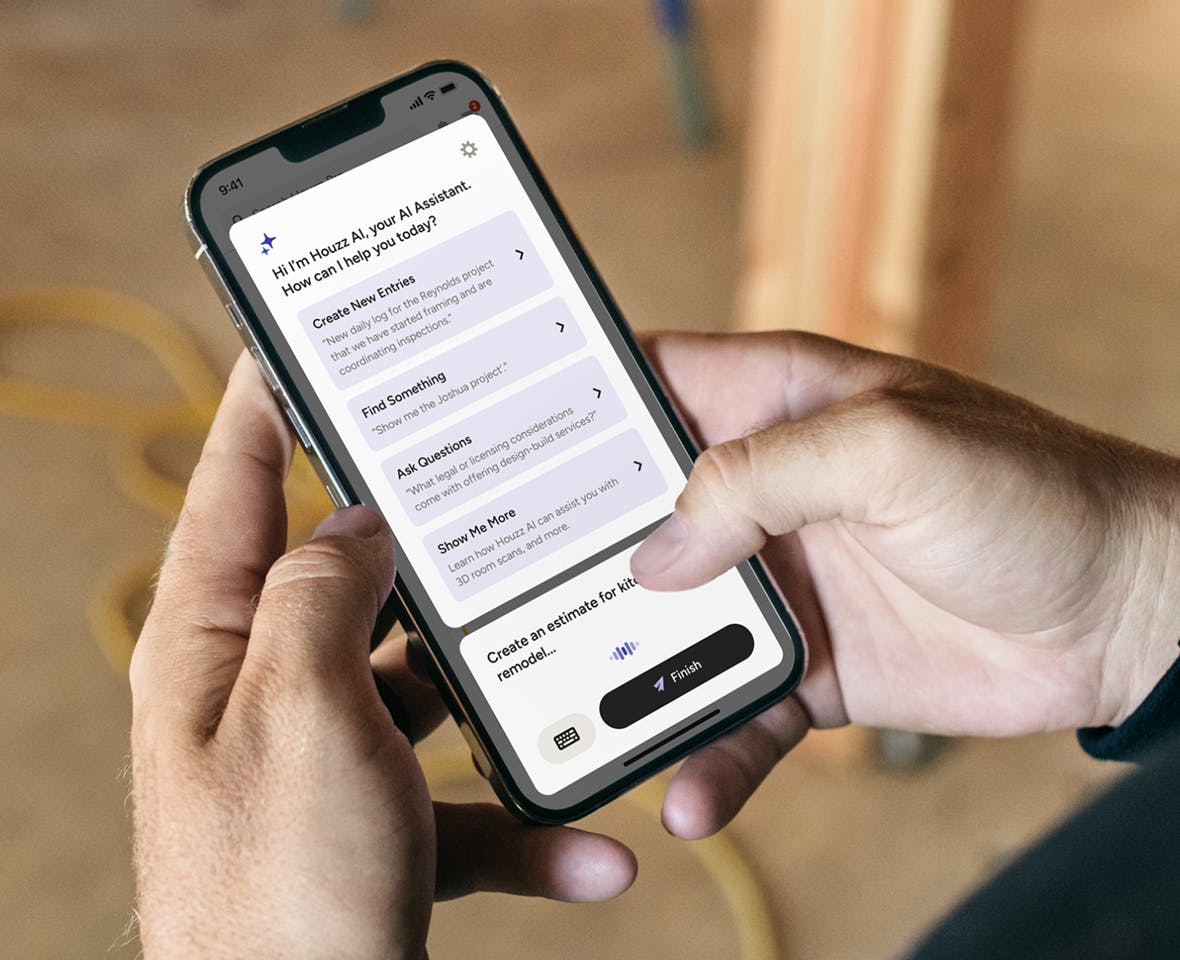
Stop cutting and pasting between disconnected point solutions and generic chat boxes. When your client experience, pre-construction estimating, project management, and financials live in a single system powered by Houzz AI, your team moves faster, communicates better, and protects margins on every job.
Build the future with AI today by scheduling a personalized demo or trying Houzz Pro free.


Want advice delivered to your inbox?
Unlock industry insights and updates for contractors and design pros
By signing up, I agree to the Houzz Terms of Use and Privacy Policy and that Houzz may use my information to contact me about relevant content, products, and services.