EPISODE 3
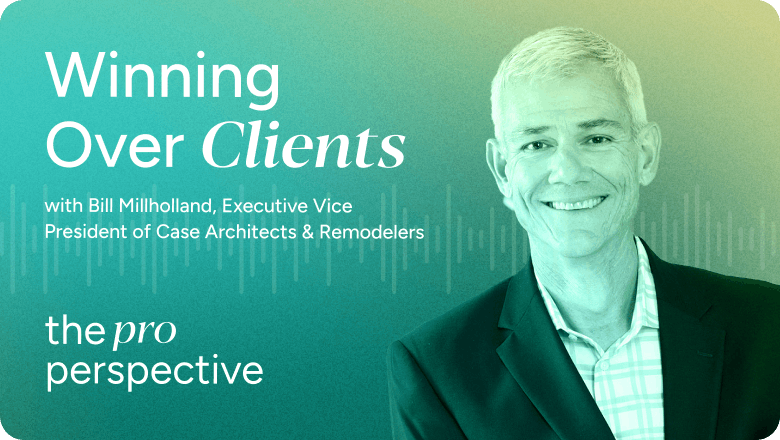
Winning Over Clients With Bill Millholland
It’s hard to come in second when you put people first. For Bill Millholland, Executive Vice President of Case Architects & Remodelers, this philosophy applies to both clients and team members. Leading one of the largest full-service remodelers in the country, Bill discusses his approach to team building and how that drives a winning sales strategy.
This is The Pro Perspective from Houzz Pro, where home builders, designers, and industry experts share their views on running a modern firm.
Liza: What's the secret to building a winning team and driving sales success in an ever-changing remodeling market? Can putting people first really lead to coming out on top? Join us as I explore this question with Bill Milholland, executive vice president of Case Architects and Remodelers. Hi, everybody, and welcome to today's podcast. We're going to be talking about both marketing and sales and preparing your team and firm for success.
I'm so excited to have our guest today, Bill Milholland. He is the Executive Vice President of Case Architects and Remodeling. Bill, I know you've been there 34 years.
Bill Milholland: Long time, yes.
Liza: Which is a long time. I thought my 12-and-a-half years at Houzz was a long time.
Bill: It qualifies as a long time. Mine is a little ridiculous.
Liza: [chuckles]100%. I think when we talked, there's obviously so much wisdom that you have to share with everyone out there.
Bill: Let's hope.
Liza: I thought it was interesting when I heard you talk about, early on and for the business in general, having the dual goals of getting a client to do a project and helping the team be successful, and I think the things that we're going to talk about today touch on both of those. Do you want to just take a moment? I know a lot of folks out there are familiar with Case, but for those that maybe are not deeply familiar, maybe just take a moment and share a little bit about the firm.
Bill: Sure. Case is located in the Washington, DC area. We have four offices, one in suburban Maryland, just outside the city, one in DC within the city limits, and then two in northern Virginia as well. Each one of those offices has, showroom is too strong a word, a design studio, more a selection space within them. We try to help clients make all their product selections right in the office. We've got a warehouse location as well in the area.
In terms of the firm, the firm's been around since 1963. Fred Case founded the firm way back then. It started off as, of course, a tiny little construction business, but he soon realized that what can sometimes be an adversarial relationship between architect and contractor was a riddle he wanted to solve. He started to hire people out of architecture schools in the area and decided that he was really interested in building a design build firm as opposed to a contracting firm and was one of the first in the nation to do that from a residential remodeling perspective.
He's always been a big believer, I think the quote is, he wanted to build a business, not a practice. Fred, from the very beginning, structured the organization so it wasn't dependent on him. We, from the very early days, had a management team and a focus on how does the business continue to run regardless of who's involved in it. That's just a quick snapshot of who we are.
Liza: I think that's a great segue, great insight, but also a great segue into what we're going to talk about today. I'm going to share a little bit of a quote from Bruce Case, the CEO of the firm, because we're going to talk about sales and marketing, but we're going to talk a lot about how processes are really the foundation of everything.
Bruce says, "Clear, proven, and consistent processes bring comfort to clients because they know what to expect and when, comfort to team members because they're clear about the responsibilities and empowerment every step of the way, and comfort to the business because consistent processes lead to predictable results." I love this because it's why we created Houzz Pro Software, right, to enable any business to more easily put those repeatable, scalable processes in place.
Bill: Right. Yes, and I think not enough businesses have done that, especially in my world, the remodeling world. Many of the businesses are fairly small. There is an owner or owners of the business wearing multiple hats, and they just don't have either the time nor the inclination or a little bit of both to actually write this stuff down. Then, maybe we'll talk a little further on about bringing new people on board. If you don't have all of this information documented, it's very, very hard to get somebody up to speed without standing over their shoulder all the time because you invented the process and you're the only one that knows it and it's not written down anywhere, so you have to tell it to somebody.
We are extraordinarily process-focused because, again, for a residential remodeler, we're a pretty big team. I think we're 160-ish people, something like that. In the scheme of the business world, it's a tiny business, but from a remodeler's perspective, a design-build remodeler's perspective, it's a pretty good-sized team. We just couldn't all work off the same sheet of music unless we had very detailed processes and they were documented and new people or even veterans knew what to do almost reflexively without having to think about it.
You just know after this happens, this happens, then this happens. Across the business, we've got design, production, and sales. Everybody knowing what's happening is really important to us.
Bill: Or you're never going to be more tomorrow than you are today.
Liza: Exactly. It's not a recipe to scale. Yes.
Bill: That's a valid decision. Yes. There's nothing wrong with that. If your desire is to build a business, then I think spending the time on developing those processes and documenting them is really time well spent. Then, I don't know about the rest of the world, but we have more clients that identify as project managers now than ever before. Whether that's they work in business and they manage projects or they're in the IT sector and they're developing software, everybody is a project manager of sorts.
Clients even find real comfort in knowing that we have a thoughtfully developed process for turning a conversation at the beginning into a finished project at the end.
Liza: Yes. The expectations are high, but it's also a huge opportunity to impress a potential client who likes that structure and process.
Bill: Absolutely. Order instead of chaos.
Liza: Makes a lot of sense. On the theme of structure and business frameworks, I know you're also a fan of the power of three. We've got three topics to give folks as a mental roadmap for our conversation today if they're out there doing something while they're listening. The first is sales strategy and opportunity development. The second is team building and performance management. The third, finally, are technology and process optimization to support the first two. Since we're focusing on a particular topic today, Bill, maybe tell me a little bit about why sales and marketing are top of mind right now.
Bill: Right now, I think it's because we all got used to sales falling off of trees and long lead times that stretched out forever. There was a lot of comfort in that. All of a sudden, those are starting to shrink a little bit. It's not. It's not that it's not good, but it's not as good as it was before. I think it's forcing us to get back in the gym and redevelop some of those muscles that we lost track of when clients were just saying, "Where do I stand in line to write you a check because I have to have this project done? I just need it done." That's not the case anymore.
People are a little more cautious with their spending. They want to know a little more about what they're spending money on. It may take a little bit more nurturing to make the decision to actually proceed with a project. Again, we've got a fairly big team of guys in the field, and I always see our job in sales is keeping those guys busy. We're the sharp end of the spear, and that if they are busy, the business is going to be just fine. The economy's stupid. Well, it's the guy's stupid. If we keep them busy, we're going to be okay.
Liza: Great. That's, I think, a good jumping-off point to talk a little bit about that pipeline and sales cycle. Maybe talk a little bit about the metrics you use to determine a healthy pipeline that's going to keep that team busy and that the sales cycle is moving the way that it should be, especially if you're seeing changes in what's out there.
Bill: Yes. We keep track of just about everything we can think of. Of course, that all starts with leads. At the beginning of a fiscal year, we develop lead projections, just like sales projections, and we break those down monthly, and then we break those down jurisdictionally, whether that's Maryland, Virginia, DC, and then we even break that down into project type, whether that might be an addition or a larger scale project, whether that's kitchen and bath focused, or maybe that's something a little more general remodeling, like a screen porch or a deck or basement, whatever it might be.
We keep careful tabs on all of that. There's an equation. It's math. We can take how much we want to sell in the course of a year, what's an average job size for each one of those categories, what's a close rate for each one of those categories, and it's just math. It spits out how many leads you need in order to hit your projections. We track that very closely. Then, we also, again, back to process, we have a three-step process for how we engage with the client on the design and sales side of things.
First step in that is what we call case study. Clever, huh? We keep tabs on that. Then, as a client moves along in the process, we enter something called contract documents, which is a little more serious step, involves a little more deposit from that client, and then a contract. We are tracking all of that information as we go in addition to average job size, because it's something we've learned along the way, is that oftentimes over the course of a year, the number of projects that sell can be remarkably similar, but the total volume of sales can vary significantly, and it often ties back to average job size.
During the pandemic, our average job size was $300,000 plus, and now it's $220,000. For every three jobs, you have to sell another one to get caught up. It just means a little more activity in that sales process. We're tracking all of that information per jurisdiction, per work type, and then per individual, because we've got a team of what we call project developers out there representing us and trying to convince opportunities, leads, whatever you want to call them, that we're the right firm to work with them. We pay attention to all of those things.
Liza: What are the major marketing or sales levers that you pull if things aren't meeting-- You're at the beginning of the year, you've got sales goals, you've backed into, I assume, leads and a certain conversion rate to opportunity case study rate, and how often are you revisiting those to say, oh dear, either we're not getting enough leads or our leads aren't converting at the expected rate? What are the adjustments that you guys look at if it's not working?
Bill: We pay attention to a lot of this stuff. I'd say daily, we're tracking leads and case studies and all of those sorts of things in and out of CRMs and then notifications coming and all the rest. As you mentioned, sometimes you don't hit those numbers. If it's a daily thing, then you let that settle out and see where the trend is going. If we start to get behind, then as you're saying, we have a couple of different levers we can pull. Most of those are general marketing. We do a lot of advertising in the newspaper here, The Washington Post, and that has been successful for us, and some other activities like that.
We also lean on our team a fair amount, in that, when leads are down, we have thousands or tens of thousands of past clients and we can reach back out to them and see what's going on and mention that, oh, that phase two that we had talked about, was it time to start thinking about that? Those sorts of things we do. Then, of course, PALS is a big lead generator for us as well in that we keep tabs on that, how each jurisdiction is performing. Should we mix things up a little bit on that end?
Then, social media, other outlets through whatever it is, Instagram, Facebook, those sorts of things. We're constantly paying attention to which of those are performing or underperforming, and then do we need to sort of turn the dial up in some of the other areas where maybe we're seeing more success?
Liza: Does that help you impact job size or do you really rely more on the team and saying, hey, guys, we need to bring up our average job size-- [crosstalk]
Bill: It's tough to influence average job size. You can do it on the margins, but if a client has a budget of, pick a number, $250,000, to convince that client they should spend $300,000 just because it can be challenging. We might try to weave in some economy of scale discussion or disruption to lifestyle discussion where if you're thinking about phasing a project, it's often a much better decision to do all of it at one time than to wait for phase two because it costs less, it takes less time, and you only have to endure a remodeling process once instead of twice.
We might have some of those discussions, but it can be challenging to influence radically average job size. People always come into a project and say, I'd like to spend X and then spend a little bit more once they get exposed to the world and see all the amazing things that can be done. I think when was the last time you ever established a budget for anything in your life and stuck to it? I have not been successful in most of those.
Liza: No, there were kids in a candy store when they saw the types of products that are available.
Bill: Yes, and just ignorant, don't know. They just don't know what is possible or what else is out there. Once they get exposed to that world, all of a sudden, those things matter. A heated floor in the bathroom, that would be wonderful. Yes, that is worth a couple thousand dollars to me or whatever the number is.
Liza: In terms of the conversations that your team is having, I guess, when do they start seeding those like, Okay, you've got a budget, but are you thinking about this? Are you thinking about that? How early in the process does that happen?
Bill: In the house at the initial lead. Most definitely there. Again, we have the luxury of maybe being a little bigger than the average design build firm. We have resources maybe others don't. We have lots and lots and lots of materials where you can have fairly detailed conversations with a client about a project before we know the details of that project.
We can help a client understand kitchen, bathroom, powder room, add a screen porch and finish the basement while we're at it, what that might look like in terms of budgeting and what each one of those components might represent in terms of a component of that budget so that they can start to wrap their head around that or make decisions like, "Hmm, it's not worth spending two hundred thousand dollars to finish my basement. That doesn't make sense. Let's focus on this, that, and the other thing."
The other thing we try honestly to do is have honest discussions about that budget and not blue sky, sunny day discussions about that project and just try to understand what's going to be important to that client, what's the level of finish, what's the level of detail, so that we can be talking about components that are realistically what we think the project is going to be when we put a contract in front of them and not, "Well, we think it's going to be 150 to 200 and it turns into 400 to 500."
Those things happen, but it's often because we've added scope or something like that. We want to be as realistic as we can upfront because there's a lot of time and effort involved in everybody's part, our part but also the client's part, and let's not go through that unless we have a pretty good understanding of what we need to do.
Liza: I'm sure a lot of folks out there are either transitioning or in the process of transitioning from just owner selling to having a team that's selling, which is a big transition. What kind of advice do you have in terms of balancing-- Salespeople have a particular mentality I think, no matter where they come from, so they're focused on their goal and their individual goal, but you're also trying to serve the client's needs and make sure they're well served and also trying to hit the company objectives and balance what's right for the company. How do you think through that [inaudible 00:18:54] balance?
Bill: That's an interesting question because we used to franchise handyman services, and we saw many of those businesses evolve to become full service design build firms, and that jump from the owner of the business controlling it to having to depend on others to do some of those tasks was one of the hardest parts of that evolution. Again, that goes back to a little bit of our earlier conversation in that you have to document all this. You have to have something to train. If you don't have something to train, the training probably won't be successful.
Developing those processes and documenting them, but honestly, the biggest, the hardest part for many of them was just letting go. Just understanding that you can't do it all, and if you want to get to that point, you're going to have to spend some time and effort to get this person off the ground. Then, coupled with that is you have to be realistic. That person is not you. They don't own the business. They haven't been working in the business for 5, 10, 20 years, whatever it is. It's going to take some time.
Whenever we bring a new person on board, we pretty much count on it taking a year until that person has their legs under them, they understand the process fluently, they understand their role within it, they're comfortable with how we do things, and they can project that confidence in front of a client. It takes a long time. Somebody going through that passage, I would first spend some time in front of the mirror and make sure you were willing to let go, then I'd start to document the process, and then I'd start looking for the right fit for your organization, because I think that's really important.
Liza: It's super important. We'll come back to how you keep tabs on these things as the owner, since you're having to let go. What do you think makes a good salesperson, and what do you look for?
Bill: Most of our, we call the person in a sales role a project developer, came from within. Oftentimes they start as a designer and they work on many, many projects with project developers. One day they're looking at the project developer next to them at the table and they think, "I can do that as well or better than you can, so I think I'd like to steer the ship and not play second chair." We get a lot of that, but we do find people from outside the organization that come in.
In either one of those situations, we're looking for somebody with a little bit of drive that understands you are responsible for creating this business. We can get you in the door, but once you're on the stage, Mr. and Mrs. Jones have to respect you, like you, appreciate you, and think you're the person that can guide them through this process. I think that's one thing, somebody with a motor, a little bit of drive. Then, secondly, somebody that's confident.
Clients can tell if you're timid in talking about what might be possible or how long it might take or what it might cost or why you're the right person, what differentiates you from the crowd, and having somebody that's got that confidence I think translates into a more successful salesperson, but it's also a really technical sales role, so that person has to have some knowledge in order to have the confidence to tell the client those sorts of things.
We're looking for somebody that is a good fit culturally with the organization, that's organized and on top of things, that is a good communicator, because I think that's more important now than ever before, and somebody that projects confidence in front of a client.
Liza: I can see why hiring from within is a great pipeline for that, because you have an opportunity, A, for that person to become confident, they learn the business, they learn the technical details, but you also have that opportunity to see them in action and see what their strengths are. When you are hiring from outside, because I know you said people from outside can be successful, do you have a favorite interview question to capture some of that for a salesperson? What do you think are some of the ways to see whether they're going to have that client confidence?
Bill: I wish I did. If somebody does and could send it to me, I would really appreciate that. I am really protective of our culture and our group. It's a team of people that work well together, that we build beautiful things. We do things the right way. We don't walk away from clients. We take that responsibility really seriously. Somebody's got to fit within that. If you're just out for yourself, if you're out to sell and run, if you're not going to participate in whatever activities, then you're probably not the right person for us.
That's probably the first filter, honestly, that I'm going to run people through. Then, after that, you've got to figure this person is representing this team in that client's home. Are you comfortable with that? Is that person going to be on it? Do they have the knowledge to give that client great advice? Is this person somebody that could become something else downstream? Do they want to grow? Are they interested in growth? All those sorts of things.
Because I think we can teach most of the stuff about remodeling, how you do it, what's step by step, it's those intangible, do they enjoy talking to people? Are they good communicators? Are they able to express what it is they're trying to convey? Do they make a great representative for the company? If all those are checkmarked screen lights, whatever, then I think we will often take the plunge and give it a try. Again, tempered with reality that this is not going to happen.
I was talking to a guy actually the other day, and he said a company he was with before brought in a new salesperson and they thought that that person would do three million dollars the first year. It's just like, maybe it's happened once, but just, again, in a design build situation, it's going to take a little while to acclimate to just what do things cost? How do I figure out what they cost? What is the process? Who's involved? Who's responsible for what?
Weeks and months to do that before you even turn them loose on going out to visit a client, and that would be with some adult supervision along to make sure that they were doing what they needed to do, which is often how we get a new person off the ground, is assign a mentor, a more senior member of the team to help them along and guide them through that process.
Liza: For a somewhat smaller firm, who do you recommend involving in the interview process for a salesperson other than the owner? Do you recommend involving other folks?
Bill: Oh, yes, I think it's better if you get some more people involved, most definitely. Almost anybody that that person might interact with regularly, that if you've got whatever, if the owner is doing sales and somebody else is doing production, then I might have that production person be involved in that conversation. If you've got a design team behind the scenes, then maybe they should be involved in that conversation. I think it's a good idea to weave as many people in as reasonable.
Honestly, good people are hard to find. Once we identify that, then we go into a little bit of a sales role. Now we're trying to convince you to pick us, pick us. That might be, "Oh, we just happen to have a happy hour scheduled for after this. Why don't you hang out and meet some of the rest of the team" or whatever it might be. That's a really good way to judge that sort of fit, that you get to see them interacting with other people. Again, on a smaller scale, that's probably tough to do. I think it's always a good idea to have a couple of different perspectives.
Liza: I think it makes sense. Yes, to sell them, to have them get a better idea of what the culture is and who the people are like. Of course, once you do bring them on board, then those people have more invested in bringing that person up to speed because [unintelligible 00:27:57] relationship. It's not like, "Oh, Billy, you just dumped this person on me for training."
Bill: Right, or when you asked me, should we hire them? I said yes.
Liza: Exactly. Now I'm on the hook.
Bill: Yes, exactly.
Liza: A hundred percent. Again, you're that owner trying to let go and thinking about getting comfortable. How do you approach tracking performance for sales people, both, I guess, quantitatively and qualitatively? Because I could see quantitatively I would love to hear what the process is there. As you said, they're representing your brand at the client's home, et cetera. What is the performance tracking on that [inaudible 00:28:45]?
Bill: Yes, no. Again, I think realistic expectations have a role to play in all of this because it's not the next day, they're out running leads. That's just not going to happen. A lot of that would be just regular one-on-one scheduled interactions with that person where nothing else in the world mattered other than, so tell me how that phone call went. How did the conversation play out? How did you introduce the idea of how long you have been thinking about this? Have you ever remodeled before? Did you mention the budget? How did you come up with that budget?
The first time they're going to stumble and flail. The second time they're going to do the-- If by the third or fourth time it's not sticking, then that's something to be concerned about potentially. Then, like you said, there's a, "Okay, John Odette's your mentor and he's got three leads this week. Have you been on all three?" "No, I couldn't make two of them." "Hmm. What's going on in that?" Okay, so the next week you make three. Good. Tell me what you saw. What did you appreciate about how he did it? Then, what might you do differently?
It's just diving into those conversations until you feel like they are at a point where they can maybe move into the first chair and have somebody else ride in the second chair. Oftentimes we will do that with crummy leads because they're going to burn them. You just know, and it's the driving range. It's get out there and groove your swing. Just swing, swing, swing before we put you on the course.
We know they're not going anywhere. Don't feel bad if they decide not to do it. They're not going to decide to do it, but just get comfortable you're going to run the presentation. Get comfortable with how you'd like to approach the tour of the home. Get comfortable with how you segue from that to maybe we could find a place to sit down and talk a little more detail about timeframe and budgeting. Just practice those things. Again, being realistic without the concern that, "Oh my gosh, I've run three leads and none of them have decided to do anything."
No, you're going to run 20 more and none of them are going to decide to do things. Once you get past 20, then we might start to give you some that might turn into something. We're going to gradually ease them in as opposed to throwing them into the deep end of the pool just because we've done this enough to know that it's just unrealistic and it takes time.
Liza: It takes time. Yes, no, that seems like a logical and healthy way to do it. Now they're up to speed, you've got your team hitting on all cylinders. Do you foster a healthy competition vibe with the group, and how do people know where they stand?
Bill: Yes, so we have an annual meeting every year and we post a leaderboard and assign a top gun and they're the big award winner and everybody claps, and so they get recognized that way in front of the entire organization. Then, we also meet weekly and put numbers up so that people understand where they are and how they're positioned within the group.
The other thing we've learned over the years and we do with the annual meeting is it's not all about top line sales, that we introduce other metrics to who wins, and that might be what the gross profit is on their project, estimated versus actual, so the people whose jobs come in, at, or above where they're supposed to are doing a little better job than people that are selling a lot and having them come in lower than expected.
Then, we also weave in some of the client reviews, ratings into that as well, because if they're out there creating delighted clients, chances are they're going to come back or they're going to recommend us to somebody else and refer us to their colleague or whatever. We weave some of that in. Then, we're pretty fortunate we've got a mature group. They've worked together for a long time, many of them. They like to be in the top 10%, and so you see people jockeying and not wanting to turn something in until the last second so they can jump up in front of somebody else. There's a whole strategy involved in it.
Liza: [unintelligible 00:33:26] back and then throw it into the mix, yes, 100%.
Bill: Exactly. We definitely do that and keep track of that. Everybody knows that, and it's not crummy, it's not cutthroat, or anything like that. There is a, I want to be on the all-star team. I want to be the best. I want to be recognized for that. We try to nurture that a little bit because that matters. There are some really competitive people in that role and they want to win. That's how they gauge winning is, am I at the top of that list?
Liza: It seems really smart to reward them for the metrics that matter to the business, not just that top line revenue. Have you noticed, when you started introducing that, that it did affect behavior and affected how they think about things?
Bill: Absolutely, because they know the impact of it. With anything else, awareness helps to foster that change of behavior. That if we weren't doing a good enough job previously, making sure people knew where they fell in some of these metrics, then you didn't have to compete and it was hidden. If there's daylight on all of that stuff, all of a sudden, you don't want to be at the bottom of that list. You may not be uber competitive and want to be at the top, but you don't want to be at the bottom. Nobody wants to be at the bottom. Yes, it has helped with that.
Liza: Given, I guess, that competitiveness, how do you encourage knowledge sharing across the team and keep them motivated to want to share with others and not keep that secret sauce in for themselves?
Bill: Again, culturally, maybe we're just fortunate as many, many other firms are in that it's a group that likes to learn and wants to get better at what they do. There is no super secret sales technique that if you do this, the client signs that piece of paper every single time. That just doesn't exist, or at least I'm not aware of it.
Most of the stuff that gets shared is more product knowledge, more permit knowledge, more code knowledge, more building that, again, confidence that if you work in Washington, DC, and Washington, DC has the most complicated zoning regulations of anywhere on the planet, I'm convinced, and they seem to change weekly, and so people share that, hey, if you run a lead in this area, chances are it's zoned this way and you need to be aware of this, or if you see a big tree in the backyard, that's now been declared a heritage tree and you have to do this, that, and the other thing.
All that stuff sounds silly until you're with a client and you say, well, that's something we need to be worried about. Why is that? Well, that tree has a circumference of this or greater. There are some things we-- "Oh, nobody else told me that." All of a sudden, it's just another little nudge to help us look a little smarter than the average bear.
Liza: Makes a lot of sense. A lot of what we've been talking about, I think, are the processes that you put in place, the documentation, et cetera, to help set folks up to be successful. I thought it was interesting that you said times have been good, clients have been lining up, and so [inaudible 00:37:08] some of the muscles atrophy, even on the process front. How have you dealt with that to get folks back into that frame of mind of following those processes that you know set them up for success, even though they may be a little rusty?
Bill: Yes, so, having a very veteran team is a blessing and a curse, that most of the time it's a good thing, but getting people to change can be a struggle. The other thing that comes with that is sometimes I think you grow numb to things that might matter to others if you've experienced them 75,000 times. An example of that that we've been trying to spend some more time on lately is I mentioned design studios earlier, in that we're in a city urban environment in some of the office locations, at least, and people are busy and live hectic lives and are balancing 75 different tasks at any one time.
If we can make sure they understand that we have a place that they can come and they can pick cabinetry and countertops and tile and faucets and windows and siding all in one place, all guided by a professional designer in an hour, hour and a half, two hours, that is a differentiator. We've grown numb to it because we've had it for a while and everybody knows that. Nobody knows that. We've got to develop some materials to make sure we convey that information to others.
Something as silly as, I think of it as human direct mail, almost, in that we have all this stuff on websites and here, there, and everywhere, but you're dependent on driving somebody to that and that person actually paying attention to it. Well, when you're in the home with them and if you just happen to have a folder full of stuff, chances are you've got a better chance of getting them to pay attention to it. We can introduce, "Here's photos of our studio spaces. Oh, let me show you the recognition that we've accomplished over the course of the last five years," instead of pointing them to the website.
"Here is some budgeting information on a piece of paper before we showed up, so it's not like we were influenced by who you are or the car you drive or the shoes you wear or whatever. This was baked before we got here." All of that kind of stuff we're trying to just reinvigorate the team to share and not assume that clients know that. Then, there's just the level of follow-up that we got away from because you couldn't follow up. It was like, "You got one shot. I'm here. Do you want to do it or not? Because I got 17 other people I got to talk to." Now you don't.
You've got to go back, and you've got to pay more attention to past clients too because they trusted you before and chances are if they have something else to do, you'd be the person they'd want involved, hopefully. It's just doing those sorts of things and then making sure everybody you know knows what you do so that if they hear something, they're going to push it your way. There's a lot of that, and honestly, it's just repetition.
Hey, guys, remember. Hey, guys, remember. On the one-on-ones, what are we doing here? How many past clients have you talked to? Just that kind of stuff over and over and over again that we got away from, and it's time to get back to that.
Liza: It's interesting. One of the things that we're hearing, and I think you mentioned at the beginning, that having processes in place that you actually share with your client up front is a selling point, and we are hearing from a technology standpoint that that's the case, having the client dashboard, having things that enable you to show the client up front, "Here's what's going to make it a good experience for you," because you're not just competing with them going to another firm.
Bill: Right, even if everything goes right.
Liza: You've been through this. I've been through three. It's a lot, right? It's a lot of investment. You have to feel, as the homeowner has to feel, good about going into that project and feeling good about it.
Bill: Yes, because like you said, you're not just competing with other firms. You're competing with a trip to Europe or a new car or whatever, where people can spend money on different things rather than just their home. We are trying to focus on the excitement component of it a little bit too because you shouldn't dread this. This should be exciting. This should be fun, and let us show you how we can make this fun, and that part of that is process related.
We're not going to ask you to do this until this so we won't put you in a position that you're making a decision you're uncomfortable with because you will have made other decisions that make this decision easier. There's a logical progression to all of this. I think clients do find real comfort in knowing you guys really seem to have this figured out. Yes, as a matter of fact, we do. We've done this how many times? We took a minute to write it down and get everybody to follow it.
Again, back to that, especially for a smaller firm, it's really hard to do, and I would just encourage people to start that process because that's the hard part, is starting it. Once you get it going, chances are you'll continue. Objects in motion tend to stay in motion. Get in motion, write something down, start to move in that area, and then workshop it, share it with your team, massage it, tweak it, adjust it, and then get it out in front of clients and explain how you do things and I think you'll see positive results.
Liza: That's great advice for everyone. In terms of the team themselves, you said folks struggle with change and we hear that too. Sometimes the back office team will adopt the technology, but it's hard to get folks in the field to adopt technology, or there's one outlier and so everyone's waiting around for the one outlier to turn over or change over. Do you dictate the use? How do you encourage folks to embrace and get out of their comfort zone, I guess, for their own sake and for your company's sake?
Bill: I don't think we've ever figured out how to get people to embrace it, maybe tolerate it or something. I don't know. We have been most successful with new policy procedures, technologies, whatever, if it benefits the person that's doing it. An example of that would be DocuSign or SignNow or whatever. It's like, why would I bother to do that? They can just write me a check while I'm there. It's 2024. Does anybody even know where their checkbook is? What are you talking about?
That there are easier ways to do these things or you can get something, if we have an addendum for a project and clients agree to it and all the rest, then it's so much easier to just send it off to them, get a digital signature on it, and you get it back. Then, everybody's on the same page. It's stuff like that. Some of the CRM has been a little more challenging to get people to keep that data up to date because they see it more as benefiting others, perhaps, than themselves. As a team, you have to do those things because others are dependent on it.
Another example is we use Buildertrend for a lot of the production stuff. Getting photos of ongoing projects in there can sometimes be difficult to get a project manager to stop for a second and take some pictures of a plumber working or whatever because they're figuring, "Who cares? It's a plumber working."
I was just in a meeting before this trying to convey to them that, "Hey, guys, this really helps me. It helps me because as I'm sitting and going through every single project that a designer or developer has on their plate, I can pull that up and say, it looks like the plumbers are working, so trades are in, drywall's coming soon. Are cabinets on their way? Because if cabinets are on their way, that benefits you, Mr. Project Manager, because you're not waiting for that.
If I can spin it so that you putting that in there helps you somehow and you may not realize it, we're more likely to see success with those sorts of things. Remodelers in general are not at the cutting edge of most technologies. This is technology to most remodeling firms.
Liza: Yes, the phone. Everything's got to be right on your mobile phone at your fingertips. Yes, we're 100% focused on mobile and making it user-friendly because if it's not easy.
Bill: People shy away from it. Yes, but I think coming out of COVID and people just getting more comfortable with remote meetings and having to do things not face-to-face has helped a little bit with the fear of new technologies, like, "Okay, I get it. This does have some benefits. Maybe it's not what I'm most comfortable with, but it does help in some ways." I think there's a little more openness to it. Just as a group, most people are not jumping in with both feet. It is a little bit of a struggle to build it into the process and get people to do it.
Liza: Got it. I guess maybe just to wrap it up, what's something you're feeling hopeful or good about right now.
Bill: I'm feeling really good about a lot of things. Interest rates are still high. There's no homes on the market. There's no inventory. Why would anybody give up a 3% mortgage? They're going to stay where they're at. Home is more important than ever. I think people have realized that over the course of the last five years that it is a place that you can hide from everything and it's worth investing in.
I don't know, I'm super optimistic in that I think the better firms are going to be successful, that it's easier to leverage technology, to leverage process, to leverage resources because for a smaller firm, it's hard to invest in those technologies, to learn those technologies, to let go of some responsibilities so you can focus on creating more opportunities. You just fall into the trap of doing the same thing.
Liza: It's getting easier. There are options now.
Bill: Absolutely.
Liza: It's all available. I feel like there wasn't anything available, and so there was such a huge difference, but I think there is a lot that are helping, folks are willing to embrace change, compete, and really be an impressive business, not just hammer-swinger, right?
Bill: I totally agree.
Liza: It's there for the taking. [laughs]
Bill: It is. It is. I'm not sure enough younger people that would embrace those technologies are coming into the business, and a lot of it's older guys like me that are continuing to do it and maybe not as willing to embrace this, which is a real, like you said, opportunity for someone to enter and differentiate.
Liza: We see the next generation with the family business. They are still coming in and they absolutely are the ones that are implementing these changes because they've grown up close to digital natives and they're like, "Yes, this is crazy." We've had some really very entertaining interviews with people talking about moving their parents into the 21st century. [laughs] It's all good.
Bill: Who has a VCR underneath their TV that's flashing 12 o'clock or something.
Liza: Exactly.
Bill: Yes, funny.
Liza: Awesome. Well, thank you so much, Bill. This was-
Bill: Yes, this has been fun.
Liza: - incredibly fun and I think going to be extremely valuable for a lot of folks looking to build out that sales muscle.
Bill: Thank you.
Liza: Awesome.
This series is brought to you by Houzz Pro. To learn more about our best-in-class software for winning clients, managing projects, and simplifying your workflow, visit houzz.com/pro.
THE PRO PERSPECTIVE
Ready to Hear More?
Take your pick from our other expert-led podcasts with more can’t-miss insights.
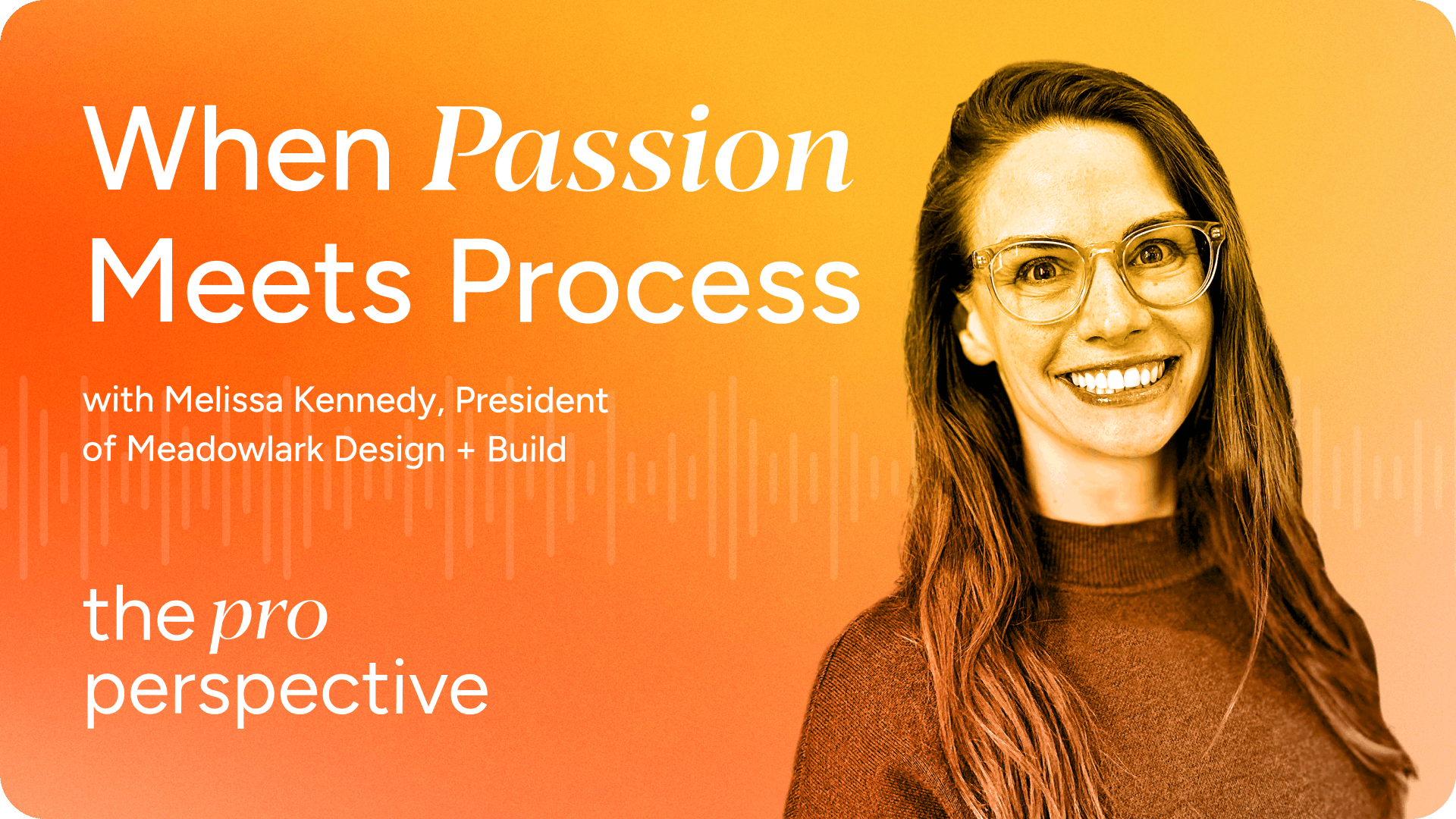
When Passion Meets Process With Melissa Kennedy
With the right strategies and systems in place, passionate work is sure to shine through. In this episode, Melissa Kennedy, President of Meadowlark Design + Build, speaks on keeping your creative spark by establishing productive processes that combine “the energy of an amatuer with the wisdom of a pro.”
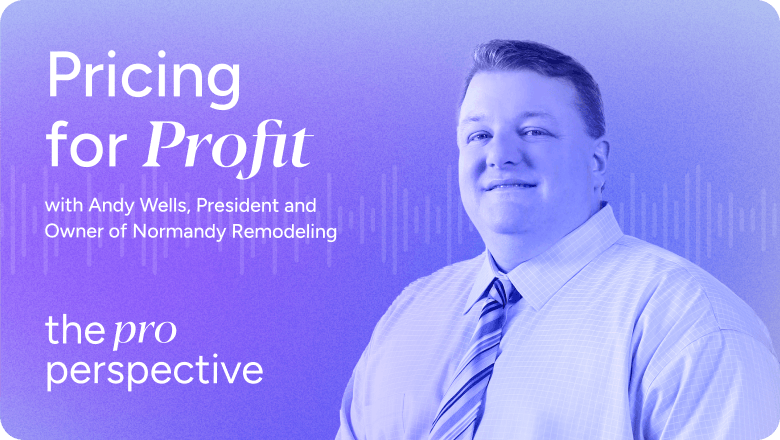
Pricing for Profit With Andy Wells
Striking the right balance when pricing projects is key to sustainable success. In this episode, design-build leader Andy Wells, President and Owner of Normandy Remodeling, shares his take on pricing strategy and profit margins honed from 45 years of managing the ups and downs of the remodeling market.
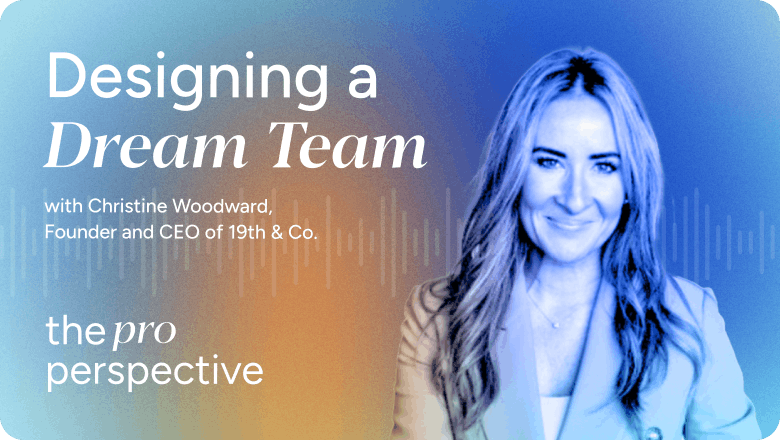
Designing a Dream Team With Christine Woodward
For firms that are ready to grow, finding the best talent is just the beginning. In this episode, Christine Woodward, Founder and CEO of 19th & Co., a women-led business consulting firm for interior designers, shares strategies for recruiting and retaining better teams based on her experience with helping top firms thrive.