Interior Designer Christina Couvillion Gets Down to Business
Learn the practices that have helped her firm successfully navigate shifting economic tides

With more than 30 years in the business and scads of five-star reviews on Houzz, Christina Couvillion knows a thing or two about how to run a successful interior design company. Here she shares the strategies, process and philosophies that have helped her accomplish so much with Davinci Interiors, her luxury-focused Austin, Texas, design firm.
Practicality Meets Creativity
While design is in Couvillion’s DNA (thanks to a mother who loved to constantly redecorate), she initially dove into the medical field, studying premed at Swarthmore College and then doing biomedical research at Harvard Medical School. But having grown up in South Florida, with its plethora of international design centers and Art Deco influences, she found the lure of interior design too strong to resist. After attending design school, working at a design center and founding a firm in South Florida for more than 15 years, she started a new location for Davinci Interiors in Austin, Texas.
With its affluent clientele, Davinci Interiors is a first-rate example of how having informed business processes can make all the difference. But Couvillion didn’t learn those processes in design school. “Very little that I learned in school actually helped me in practical application as an interior designer,” Couvillion says. “I would say the biggest gap is that creatives need to learn how to be efficient businesspeople.”
She points to Houzz Pro all-in-one software as an essential part of the process, not just for the Davinci team but for other designers as well: “It’s so wonderful for creatives, because it gets them to become more mindful about being a businessperson and approaching their designs with a business mindset,” she says.
Trust-Building Tips
“The client experience is so important to us,” Couvillion says. “We always follow up and do what we say we’re going to do. And we’re very transparent in our processes.” One big help in creating transparency, she says, is Houzz Pro’s Client Dashboard. It gives clients “visibility, both on their design and financials,” she says. “Our clients really like it, because they see transparency in numbers, and they can see the value of the design itself.” The Client Dashboard lets designers share access to project photos and files, daily project logs, product pricing, timelines and much more.
But trust-building starts even before the design phase. “From the first point of engagement, we start leveraging Houzz Pro to get the client onboarded for us to set up all our design boards,” she says. “We have a standard procedure for every project that we follow. That makes us more efficient as a design firm. The less time I spend on the back end operationally, the more I win with my design.”
Being efficient and creating stellar designs conveys that Davinci’s team members are professional to the nth degree. “Even after their project, clients still look upon us as the trusted experts,” Couvillion says. For instance, they call for guidance on product purchases. That’s the kind of trust that leads to repeat business, referrals and positive reviews.
On the Money
Determining whether a particular project and the business as a whole are on track to earn the desired profit means digging into the numbers. While some creative types can find diving into financial analytics daunting, Couvillion says it’s essential — and she’s found a way to make it easier. Houzz Pro’s financial reports have “been invaluable to us, because that way we can run business analytics on not only where the client is in terms of their retainer, but also do a retrospective on the project to find out how efficient we were. What was the ROI on this project versus others?”
Couvillion also appreciates being able to offer her clients the ability to pay retainers and invoices online. She says that passing on the small fee to them in the form of a visible invoice element has “been a nonissue with clients. They’ll either just go ahead and pay it, or they’ll say, ‘Oh, no. You know what? Give me your wire transfer instructions.’” She adds, “They know it’s not us. If it’s up to me, I wouldn’t charge you that, but it’s a processing fee that is imposed by a software company. They get it. I think they're accustomed to that now.”

It’s About Time
Couvillion keeps track of time spent on projects as part of her regular analytics, so she’s particularly aware of how to maximize efficiency and minimize time spent unnecessarily. And that applies to two main aspects of the business.
First, she saves time onboarding her own team members as well as clients. “It’s so easy to onboard people with Houzz Pro,” she says. “It’s pretty intuitive. That makes our onboarding process a lot easier, especially when they haven’t had engagement with the software.”
Second, she saves time on project-related tasks — although that came over time. Initially, “we were using supplementary software to do our mood boards, for instance. That created a pain point, because I clipped every image into another software. Then when I was creating invoices and purchase orders, I had to reduplicate all that information or just have one line item and attach a PDF of the other software’s stuff.”
Now, with Houzz Pro, “I can do my mood boards, which means now I have all the products in one place, and I can generate invoices and purchase orders from there. Being able to use the software holistically has saved me probably 15 hours a week.”
On Being Recession-Proof
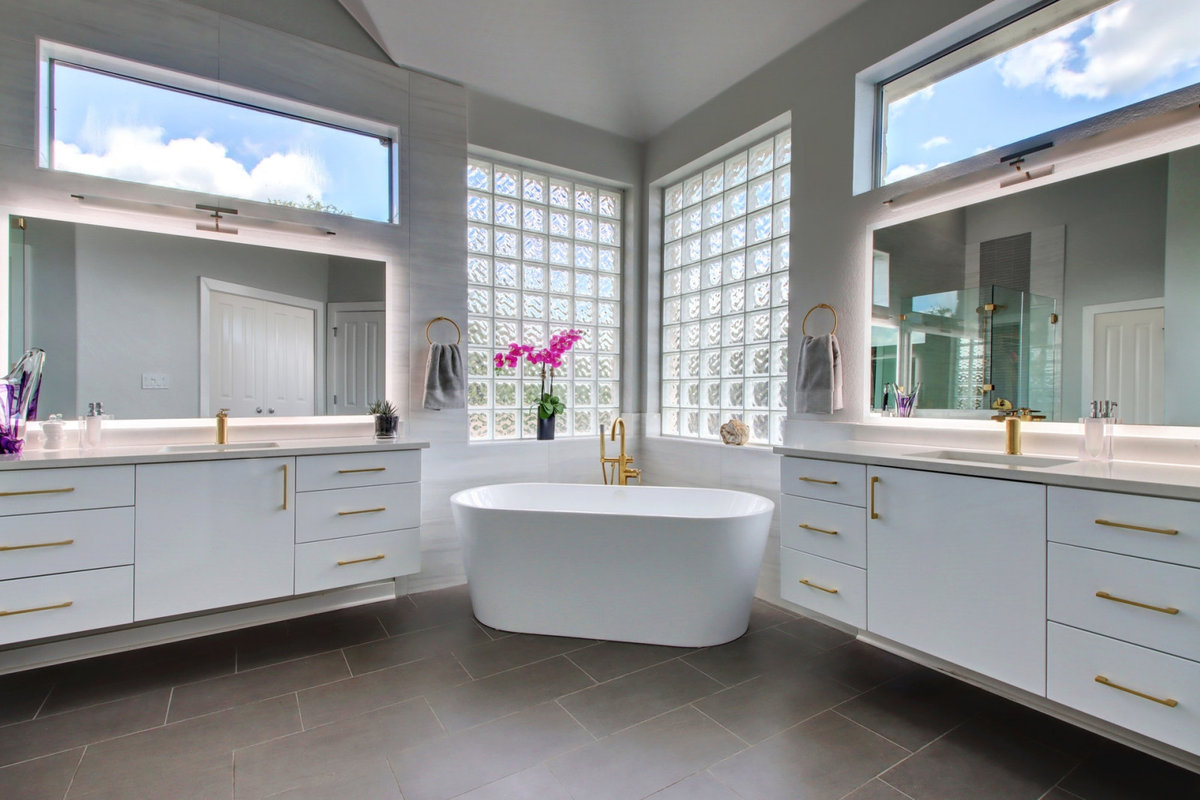
Couvillion has discovered the power of adapting a business model to the economy, versus having set-in-stone service offerings. Given the high interest rates as of this writing, “people are holding tight to their money,” she says. To keep profits coming in, she has opened up Davinci’s model to include providing a design and then allowing clients to procure their own products via the mood boards.
“It’s nice, because these selection boards allow us to provide that service as well,” she says. “It’s good to be able to leverage your software to be recession-proof. When the economy is great, then we do all the procurement and make more profit. When it’s not, we can still do the selections and let them have at it with the design.”
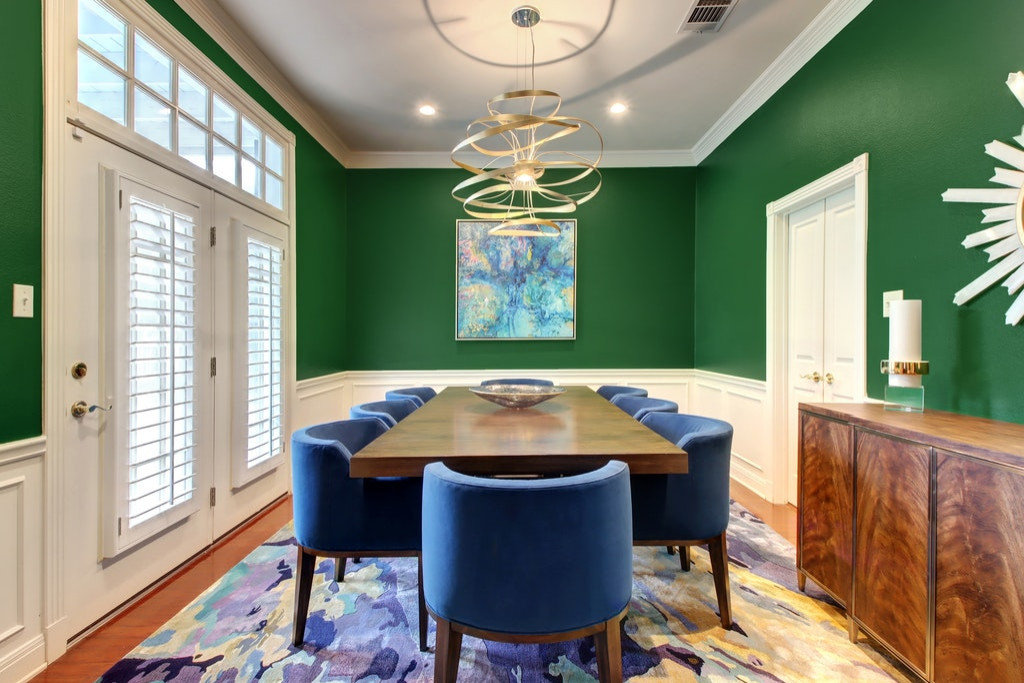
Another growth opportunity she’s looking into is “coming up with curated luxury corporate housing furniture groupings, from the forks to all the furniture and the bedding,” she says. “Austin is such a big corporate town. We have all these C-level executives coming in, staying in all these corporate housing environments with tragic furniture that they would never have in their own homes. We’ve started leveraging the mood boards that say, like, ‘Here’s a bespoke design that you can put in your luxury corporate housing.’”
Growth Factor
If you want to scale your business, Couvillion recommends asking yourself, “‘What are the tools that I can leverage to engage that?’ You need some type of tool, and that tool needs to be able to give you visibility on your financials. It needs to help you in your creative process. It needs to help you as you grow your team. A software like Houzz checks all the boxes.”
She adds, “You may not be there now, but you need to be on a platform from the beginning that allows you to be that dream interior design firm that you’re aspiring to be. For me, leveraging Houzz and doing business analytics to get the best return on Davinci Interior’s overall business are how I’ve been able to scale up my business.”
Curious to see how Houzz Pro can help your business embody your vision? Try it free today!


Want advice delivered to your inbox?
Unlock industry insights and updates for contractors and design pros
By signing up, I agree to the Houzz Terms of Use and Privacy Policy and that Houzz may use my information to contact me about relevant content, products, and services.